

My success with free kicks is 5% skill and 95% visualisation.
— Gianfranco Zola, Footballplayer
The Vision Within
Close your eyes and imagine standing at the very peak of your ability—in your sport, your music, your work, or perhaps in a language you long to speak fluently. Feel your body moving exactly as you’ve always dreamed it could. Feel your voice carry, your eyes meet others with confidence, and your heart mastering the moment.
Notice the thoughts that finally support you, the emotions that give you strength, and how the obstacles that once brought fear now only sharpen your focus.
What you just experienced is imagination. In the world of performance, we call it a tool for training—a way to weave skills and courage into our very being. But more than that, it is a way to reach for the person you are meant to become, raising both your effort and your life to a new, resonant height.
Imagination: Where the Inner and Outer Performance Meet
In the world of sports, imagination—or visualization—is never just a side exercise. It is a vital thread in the fabric of mental training. It lives alongside the goals we set, the way we speak to ourselves, and the moments we find stillness. It is built on a simple, yet profound truth: our inner images have the quiet power to shape our reality.
Sports psychology is the field that explores this very intersection. It honors the fact that motivation, emotion, and the way we think can strengthen us just as much as hours of technical drills or physical conditioning. Within this space, imagination has become a bridge—a way to connect the depth of our inner experience with the performance we eventually show the world. It is where the athlete’s longing meets their actual potential.
The Science of the Inner Image
What makes these tools so transformative is that they are deeply rooted in how our brains are wired. When we engage in Mental Rehearsal, we aren’t just daydreaming; we are activating the motor cortex and neural pathways almost identically to when we physically move. Through this repetition, we strengthen our “muscle memory” in the mind before we even step onto the field.
Sports psychology has mapped this connection for decades. It shows us that:
-
Cognitive Restructuring is the art of shifting our internal narrative, moving from self-criticism to constructive action—a change that fundamentally alters how we recover from setbacks.
-
Meditation and Relaxation aren’t just about peace; they are biological tools to lower cortisol and find that elusive “flow state” where focus becomes effortless.
-
Positive Self-Talk acts as a bridge to confidence, reducing anxiety by replacing doubt with instructional and motivational clarity (Hardy, 2006).
-
Imagining Training Under Pressure serves as a form of “stress inoculation.” By confronting difficult scenarios in the safety of our imagination, we teach our nervous system to remain composed when the stakes are high (Vealey & Forlenza, 2007).
In this practice, we are doing more than just hoping for success. We are performing a neuroplastic reorganization—weakening the old patterns of fear and strengthening the new pathways of precision and calm. It is here that our longing for growth meets the biological reality of change.
Key Distinction
Rehearsal vs. Daydreaming: Mental imagery is not just “thinking about” success; it is a biological simulation. When you visualize, you aren’t escaping reality—you are building the neural pathways required to perform within it.
A Journey Through Time: When the Mind Became the Arena
The roots of sports psychology trace back to 1920s Germany, where pioneers first began to explore how our inner world affects our outer strength. These early steps were simple—focusing on rhythmic phrases and the breath—but they opened a profound door: the realization that the mind is an arena just as vital as the physical field.
In the 1960s and 70s, this field took a historic leap in the Soviet Union. Elite figure skaters, gymnasts, and weightlifters were guided to rehearse their movements with breathtaking intimacy. They didn’t just “think” about their performance; they felt the precise angle of a limb, the tension in a muscle, and the rhythm of their breath. When researchers monitored these athletes, they discovered a turning point for performance science: even as they sat perfectly still, their nervous systems fired in sequence with their imagined movements. The electrical signals in their muscles—measured as Electromyography (EMG) activity—mirrored those of actual physical training, albeit at a lower magnitude. This provided the confirmation that imagined movements strengthen neural blueprints, serving as a foundation for outer excellence (Suinn, 1983).
As the field evolved, Guided Imagery emerged from the worlds of rehabilitation and healing. It taught us that by engaging all our senses—sight, sound, touch, and even scent—we could create a holistic experience that deepens focus and bodily presence. By the 1980s and 90s, these techniques became essential for recovery, injury healing, and finding mental clarity under pressure. A parallel breakthrough in Motor Imagery further solidified this path, proving that the brain activates many of the same neural networks during visualization as it does during physical execution (Jeannerod, 1994). For the performer, this meant the ability to supplement physical training with mental rehearsal, etching movements into the mind over and over again.
This journey toward mastery eventually led to the creation of the PETTLEP model in the early 2000s (Holmes & Collins, 2001).

It stands today as the definitive bridge between theory and practice, ensuring that visualization mirrors reality across seven vital dimensions: Physical, Environment, Task, Timing, Learning, Emotion, and Perspective.
The Science of Sports Imagery: Why It Works
Throughout the 20th century, sports psychology has developed several theories to explain why imagination is such an effective tool. Together, they show how our inner world and our physical performance are deeply connected.
Psychoneuromuscular Theory (1930s–40s) This theory suggests that when you imagine a movement, you activate the same neural pathways as when you actually perform it. Even if the body stays still, these neural signals are real and measurable. Through repeated visualization, you strengthen the connections that refine muscle memory and coordination—allowing you to train your precision without wearing down the body (Jacobson, 1931; Holmes & Collins, 2001).
Symbolic Learning Theory (1970s) Here, the brain acts as an architect building mental “maps” for success. When an athlete visualizes a sequence in detail—like a complex gymnastic move or a match strategy—the brain stores it as an internal manual. This makes it easier to execute the right move or make quick decisions during high-pressure moments (Sackett, 1934; Holmes & Collins, 2001).
Vividness Theory (1980s–90s) This theory emphasizes that the power of an image lies in its detail. It is about engaging the senses: the sound of the crowd, the feel of the equipment, and the atmosphere of the arena. When a visualization is sensory-rich, the brain processes it as a more realistic experience, making the mental training far more effective (Isaac, 1992; Holmes & Collins, 2001).
Controllability Theory (1980s–90s) It is not enough to just see an image; you must also be able to steer it. This theory highlights the importance of being able to correct mistakes in your mind. When an athlete visualizes a failed move and then mentally adjusts their technique, they build both the resilience and the self-confidence needed to handle real-world challenges (Murphy & Jowdy, 1992; Holmes & Collins, 2001).
Guided Imagery as a Source of Inspiration (1960s–70s) Originally used for recovery and health, Guided Imagery brought the practice of focus and calm to sports. By using multisensory images to foster body awareness, it helped athletes find their center. While modern methods are often more task-specific, this tradition reminds us that a focused performance often begins with a calm and grounded mind (Holmes & Collins, 2001).
The PETTLEP Model: A Research-Based Framework for Imagery
In the early 2000s, Holmes & Collins (2001) introduced the PETTLEP model, which has become one of the most influential frameworks for mental training in sports psychology. The model is built on the concept of functional equivalence—the discovery that the brain activates remarkably similar neural networks during imagined movement as it does during actual physical execution.
PETTLEP is an acronym representing seven dimensions: Physical, Environment, Task, Timing, Learning, Emotion, and Perspective. These dimensions describe how visualization becomes most effective when it mirrors reality as closely as possible—from the position of the body to the emotional state of the athlete.
Since its launch, numerous studies have shown that regular mental rehearsal using PETTLEP leads to measurable improvements in performance. Today, it is a central method for planning, training, and evaluating critical performance situations.
-
Physical: Focus on how the body feels, including wearing your actual kit or holding your equipment to ground the experience in reality.
-
Environment: Imagine the actual setting—the sights, sounds, and people present in the arena or workspace.
-
Task: Visualize the specific details of the performance, tailoring the complexity to your current skill level.
-
Timing: Rehearse the movement in real-time. For complex technical skills, slow motion can occasionally be used to refine precision.
-
Learning: Ensure the imagery evolves as you grow. As your skills improve, your mental images must be revised to reflect your new level of mastery.
-
Emotion: Include the authentic feelings associated with the task, such as the surge of adrenaline, anticipation, or even managed nervousness.
-
Perspective: Alternate between a first-person perspective (seeing through your own eyes) and a third-person perspective (watching yourself as if on film).
Research consistently suggests that the more of these elements you include in your visualization, the higher the probability of reaching your goal. The PETTLEP model is not just an exercise; it is a comprehensive map for turning inner vision into outward achievement (University of Birmingham, 2010).
Key Distinction
Fidelity vs. Fantasy: The brain cannot distinguish between a vivid simulation and reality. By including the seven PETTLEP dimensions, you move from a vague “wish” to a high-definition neural blueprint that the body perceives as real.
Imagination in Action: How the Pros Practice
To see how PETTLEP works in reality, we can look at how elite performers in different fields structure their mental training sessions. They don’t just “think” about their goal; they build a deliberate, sensory-rich experience.
The Weightlifter: Power through Precision
For an Olympic weightlifter, the mental lift is as intense as the physical one.
-
Physical & Environment: The lifter stands in their garage gym, wearing their lifting belt and shoes. They grip a wooden dowel or just close their hands, feeling the imaginary “knurling” of the cold steel bar (Physical). They visualize the chalk dust in the air and the silence of the room (Environment).
-
Task & Timing: They mentally execute the “snatch,” focusing on the explosive pull and the snap of the wrists (Task). They do this in real-time speed to ensure the nervous system is primed for the actual velocity of the lift (Timing).
-
The Result: By the time they touch the real bar, their muscles have already “pre-fired” the sequence needed for success (Callow et al., 2013).
The Musician: The Internal Concert
A pianist uses imagination to master a difficult concerto without even touching the keys.
-
Timing & Learning: The pianist visualizes a complex fingering sequence. They might start in slow motion to perfect the movement (Learning) before moving into the actual tempo of the piece (Timing).
-
Emotion & Perspective: They don’t just see the keys; they evoke the feeling of “stage presence” and the adrenaline of a live performance (Emotion). They alternate between seeing their fingers from their own eyes and seeing themselves from the audience’s seat to ensure their posture is correct (Perspective).
-
The Result: This mental rehearsal prunes away technical “noise,” allowing for a performance that is both technically perfect and emotionally resonant (Wright, Wakefield & Smith, 2014).
The Dancer: Fluidity and Form
A ballet dancer uses imagery to “pre-activate” the grace required for a difficult turn.
-
Physical & Task: Even while resting, the dancer engages their core and imagines the tension in their toes (Physical). They walk through the entire choreography, feeling every transition and jump in their mind’s eye (Task).
-
Environment & Emotion: They visualize the heat of the stage lights and the vastness of the theater (Environment). They inhabit the character of the dance, ensuring their facial expressions and emotional energy match the movements (Emotion).
-
The Result: EMG measurements show that the dancer’s muscles fire in response to these images, creating a “neural map” that makes the physical performance feel effortless (Nordin & Cumming, 2005; Beckmann et al., 2025).
The Role of Self-Talk in Performance
While inner images are powerful, they gain even more strength when combined with the words we speak to ourselves. Self-talk acts as a form of internal coaching—a voice that can quiet doubt, sharpen focus, and sustain energy when nerves take hold. Research shows that athletes who practice constructive self-talk improve both their confidence and their technical precision (Hardy, 2006).
These words become mental anchors—simple phrases that the body recognizes and responds to: “I am ready.” “I can do this.” “Focus now.” When these affirmations are woven into the inner images of visualization, they create a unified experience where thought, emotion, and body move in a single, determined direction.
Training for Failure: Why Challenges Matter
It may seem counterintuitive to imagine failure, but it is a vital part of mental mastery. By visualizing obstacles in advance—a misstep, a distraction, or a poor start—you train your ability to recover quickly. When the mind and body have already “been there” in the safety of the imagination, the real-world situation becomes far more manageable.
This is not about feeding fear; it is about building resilience. Practicing how to handle a setback allows you to remain composed when the unpredictable happens (Vealey & Forlenza, 2007). In this way, imagination becomes more than just a tool for seeing success—it becomes a mental arena where you learn to meet reality with calm and certainty.
Key Distinction
Resilience vs. Avoidance: Imagining failure isn’t about feeding fear; it’s about neutralizing it. By meeting obstacles in the safety of your mind first, you transform a potential panic response into a trained, professional recovery.
How Imagination Rewires the Brain
The improvements we see through visualization are rooted in the brain’s remarkable ability to reshape itself—a process known as neuroplasticity. When we repeatedly rehearse a performance in our mind, we sharpen the brain’s focus and build new neural pathways. For this effect to be truly transformative, every sense must be engaged—from the subtle, fine-motor impulses in the body to the deep emotions tied to the action itself.
During mental skill training, a neuroplastic reorganization takes place. The brain forms new networks while simultaneously dampening or “silencing” the pathways that support unwanted behaviors. By consistently practicing confidence, precision, and poise—in both thought and feeling—these new connections become stronger than our old patterns.
Uncertainty, fear, and inhibitions are also neural connections. These are weakened by purposefully training a sense of safety and technical precision into our movements. Mental visualization acts as a safeguard, protecting us from falling back into less effective habits.
A relatable example is learning a musical instrument: as we master a new piece, our hands must harmonize with our hearing, rhythm, and tone. Through repeated practice, “wrong notes” are gradually replaced by certainty and grace.
Source: Huberman, A. (2023, April 24)
Building and Pruning: The Mechanics of Growth
This is the essence of neuroplasticity—building new neural pathways while clearing away those that are no longer relevant. Two central processes govern this transformation:
-
Long-Term Potentiation (LTP): This strengthens the connections between active neurons, making your new skills more accessible.
-
Long-Term Depression (LTD): This weakens ineffective or unwanted connections, freeing up resources for improvement.
Through these processes, imagination becomes a physical act of change, allowing us to sculpt a brain that is ready for the challenges we long to master.
Key Distinction
Sculpting vs. Stagnating: Your brain is not a static organ. Through LTP (strengthening) and LTD (pruning), imagination acts as a chisel. You have the power to consciously “carve away” old anxieties and “harden” new habits of confidence.
Imagination – From Sports to Music, Dance, and Performing Arts
The principles behind visualization and the PETTLEP model are not confined to the world of sports. Research shows that the same mechanisms of functional equivalence and neuroplasticity apply across all areas of human performance—including music, dance, and stage performance (Holmes & Collins, 2001; University of Birmingham, 2010).
A pianist mentally practicing a concert passage activates similar brain networks as they do when playing physically. It has been demonstrated that the PETTLEP model can be directly adapted for musicians to strengthen both technical precision and stage presence (Wright, Wakefield & Smith, 2014).
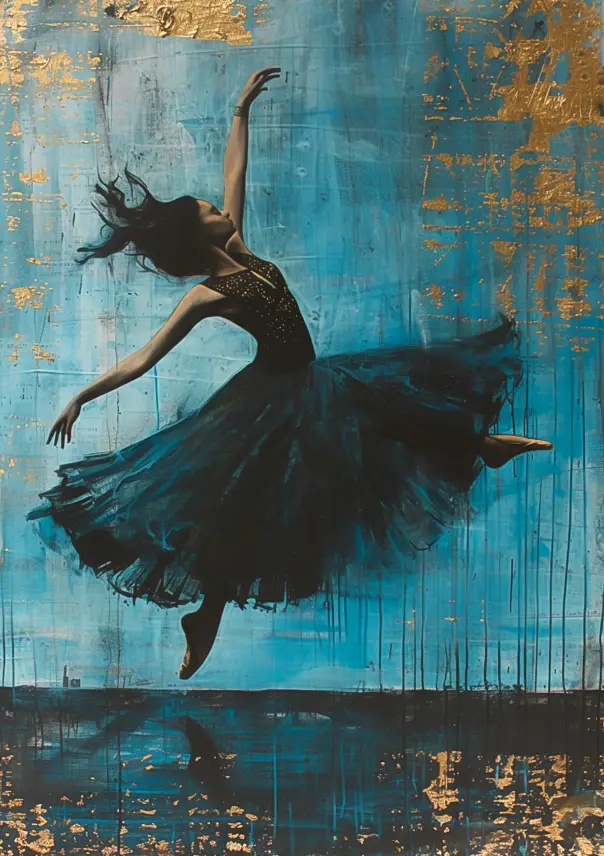
In dance, imagery has taken on a vital role. Studies show that when ballet dancers use visualization, muscle activity increases in the specific muscles required for their positions—measured via EMG—proving that inner images affect the body on a physiological level (Beckmann et al., 2025). Furthermore, experienced dancers tend to use more complex, sensory-rich, and controlled imagery than beginners, giving them a significant mental advantage in both learning and stage performance (Nordin & Cumming, 2005).
Even in theater and the performing arts, visualization is used to regulate emotions, build a sense of safety, and rehearse performances internally. An actor, for instance, can train themselves to evoke a specific emotion at a crucial moment or practice keeping performance anxiety in check through focused imagery.
In short: the principles of PETTLEP and general imagery have been documented across various artistic and performance-oriented fields. In these arenas, inner images become just as important as the physical rehearsals on stage or in the studio (Holmes & Collins, 2001; Wright, Wakefield & Smith, 2014).
Neuroplasticity in Action: Mapping the Performing Brain
To understand how imagination reshapes the brain, we must look at what happens “under the hood” during different types of performance. Whether you are a weightlifter, a dancer, or a musician, your brain utilizes specific regions to transform thought into physical mastery through the two primary mechanisms of neuroplasticity: Long-Term Potentiation (LTP) and Long-Term Depression (LTD).
The Weightlifter: Motor Cortex and Powerful Synchronization
When a lifter visualizes an explosive snatch, the Primary Motor Cortex and the Supplementary Motor Area (SMA) fire in precise sequences.
-
Before: Neural signals to the muscles may be scattered or “noisy,” leading to inefficient force production.
-
After (LTP): Through mental rehearsal, an LTP process occurs within the motor pathways. The synapses between neurons in the motor cortex are strengthened, creating a “neural highway.” This ensures that when the actual lift takes place, the signal strength is maximized and muscle recruitment is perfectly synchronized (Ranganathan et al., 2004).
The Musician: Auditory-Motor Loops and Precision
A pianist mentally practicing a concert passage engages the Cerebellum (for timing) and the Auditory Cortex (to “hear” the notes).
-
LTD in Practice: Here, we frequently see LTD (Long-Term Depression). LTD weakens inefficient or incorrect connections—the “wrong notes” or unnecessary tension in the fingers. The brain prunes away neural noise to free up resources for correct movements.
-
The Result: By dampening the pathways that lead to mistakes (LTD) while simultaneously reinforcing exact movement patterns (LTP), the brain creates refined communication between auditory input and motor output (Wright, Wakefield & Smith, 2014).
The Dancer: Mirror Neurons and the Basal Ganglia
Dancers often use the Mirror Neuron System and the Basal Ganglia to refine grace and posture.
-
The Neurobiological Link: By imagining the flow of a movement, the efficiency of neural pathways in the basal ganglia—which govern automated movements—increases.
-
Physiological Effect: EMG measurements show that muscle activity increases in the exact muscles required for the movements, even though the dancer remains still. This is because the brain has “pre-activated” the neural circuits, making the physical performance feel effortless and fluid (Nordin & Cumming, 2005; Beckmann et al., 2025).
Public Performance: Prefrontal Cortex and Emotional Regulation
When training for a presentation on stage or in a boardroom, growth occurs in the Dorsolateral Prefrontal Cortex (dlPFC), the brain’s center for executive control.
-
Rewiring Fear: Through imagination, the dlPFC is trained to regulate the Amygdala (the fear center). LTP strengthens the inhibitory connections from the prefrontal cortex to the amygdala, allowing the performer to maintain calm under pressure.
-
LTD: Simultaneously, the pathways that previously triggered a panic response (LTD) are weakened, creating a permanent shift in how the individual reacts to stress (Holmes & Collins, 2001).
I think that everything is possible as long as you put your mind to it and you put the work and time into it. I think your mind really controls everything.
— Michael Phelps, Swimmer
Case Study: Elin’s Mental Preparation for the Finals
Elin is a 22-year-old high jumper. Ahead of the National Championship finals, she set a clear goal: to clear a height she has never reached in competition before. Together with her coach, she uses the PETTLEP model as the foundation for her mental training.
-
Physical: Every evening, Elin puts on her competition kit, including the exact shoes she will wear at the stadium. She feels the spring in her legs and the grip of the spikes against the floor.
-
Environment: She visualizes herself at the stadium, hearing the murmur of the crowd, the sound of the loudspeakers, and smelling the scent of the grass.
-
Task: She imagines the jump step by step—the approach, the final stride, the drive of her arms, and the weightless sensation of clearing the bar.
-
Timing: She practices in real-time speed, but occasionally uses slow motion to refine and correct specific technical details.
-
Learning: Whenever she notices a small error in her mind (e.g., an approach that is too short), she corrects it immediately, building a more accurate and powerful internal image.
-
Emotion: She allows her nervousness to be present but transforms it into fuel. She also visualizes the surge of joy upon clearing the bar.
-
Perspective: She alternates between seeing the jump through her own eyes (the internal sensation) and an external view, as if watching herself on film.
To strengthen this process, Elin utilizes self-talk. When doubt creeps in—“You can’t do this”—she responds with her trained inner voice: “I am strong, I am ready, I have done this hundreds of times.” This dialogue acts as a built-in reinforcement of her visualization.
However, Elin doesn’t only practice success. She also visualizes obstacles: the bar falling, a mistimed approach, or a sudden distraction from the crowd. In every scenario, she practices maintaining her composure and finding her rhythm again. When these situations occur in reality, they no longer feel threatening—she has already “been there” and knows exactly how to respond.
On the day of the competition, Elin experiences something remarkable: everything feels familiar, almost predestined. Her body follows the internal tracks she has meticulously created. She clears her target height—and afterwards, she credits not only her physical training hours but the mental preparation that made her ready for both the peaks and the pitfalls.
From Vision to Reality: Taking Control of Your Internal Stage
Elin’s story reminds us that imagination is not a passive daydream; it is an active engagement with our own potential. Whether you are mastering a high jump, a piano concerto, or a difficult professional conversation, the “source code” of your performance lies in the images you choose to inhabit. By training under pressure in the safety of your mind, you don’t just hope for a better outcome—you build the neural architecture to ensure it.
Now, it is your turn. Take this opportunity to engage your own internal theater through the following practice.
Stepping Into Practice: A PETTLEP Guide to Mastering Your Performance
To help you integrate these theories into your daily life, let’s apply the PETTLEP model to a common high-pressure scenario: delivering a presentation at work. Use this step-by-step guide to prime your nervous system for success.
Preparation
Find a quiet space where you won’t be disturbed. Close your eyes, take three deep breaths, and allow your body to settle.
- Physical: Do not just think about standing there—feel it. Imagine the weight of your body against the floor and the texture of the clothes you’ll be wearing. If you usually hold a clicker or a pen, mimic that grip with your hand now. Feel your breath becoming steady and low in your belly (Holmes & Collins, 2001).
- Environment: Construct the room in your mind. Notice the light reflecting off the screen, the arrangement of the chairs, and the faces of your colleagues. Hear the subtle hum of the ventilation or the distant sound of a hallway. The more detailed the environment, the more “real” the simulation becomes for your brain.
- Task: Walk through your presentation with precision. Visualize your opening sentence, the way you transition between slides, and how you emphasize key points. Focus on your technical execution—your posture, your hand gestures, and the clarity of your voice.
- Timing: Rehearse the entire event in real-time. Avoid the temptation to “fast-forward” through the difficult parts. By experiencing the actual duration of the speech, you are building the pacing and stamina required for the real event.
- Learning: Reflect on your past experiences. If you know you tend to speak too quickly when nervous, consciously visualize yourself pausing, taking a breath, and maintaining eye contact. As you improve in your mind, you are updating your “internal manual” for public speaking.
- Emotion: This is crucial. Invite the feelings you want to have. Feel a sense of quiet authority, the pride of sharing your knowledge, and a calm focus. If a flash of anxiety appears, acknowledge it, and then mentally steer yourself back to a state of composure.
- Perspective: Alternate your view. First, experience the room internally (through your own eyes, seeing the audience). Then, shift to an external perspective (seeing yourself from the back of the room, looking confident and prepared). This dual perspective strengthens the neural representation of the task.
The Result: When the moment finally arrives to step onto the stage, your brain will not be facing a new, stressful event. It will be executing a familiar routine. You have already “performed” this successfully dozens of times in the safety of your mind—giving your body a clear, confident track to follow.
The Infinite Horizon: Imagination as a Lifelong Ally
As you have experienced through these exercises, the power of imagination extends far beyond the boundaries of sports or stage performances. It is a fundamental human faculty—a wide and versatile force that we can harness to reshape almost every aspect of our lives.
Beyond mastering skills, imagination is our most direct tool for:
-
Healing: Rewriting the emotional impact of the past to find peace in the present.
-
Resilience: Rehearsing calm in the face of life’s inevitable uncertainties.
-
Empathy: Simulating the perspectives of others to build deeper, more meaningful connections.
-
Self-Discovery: Exploring the symbols and inner voices that reveal our true values and desires.
The images you hold inside are the blueprints for the life you live outside. Imagination is not an escape from reality; it is the laboratory where reality is first constructed. By reclaiming this space, you aren’t just improving a specific performance—you are building a lifelong resource for clarity, autonomy, and growth. Your internal world is a vast territory waiting to be explored. Where will you take it next?