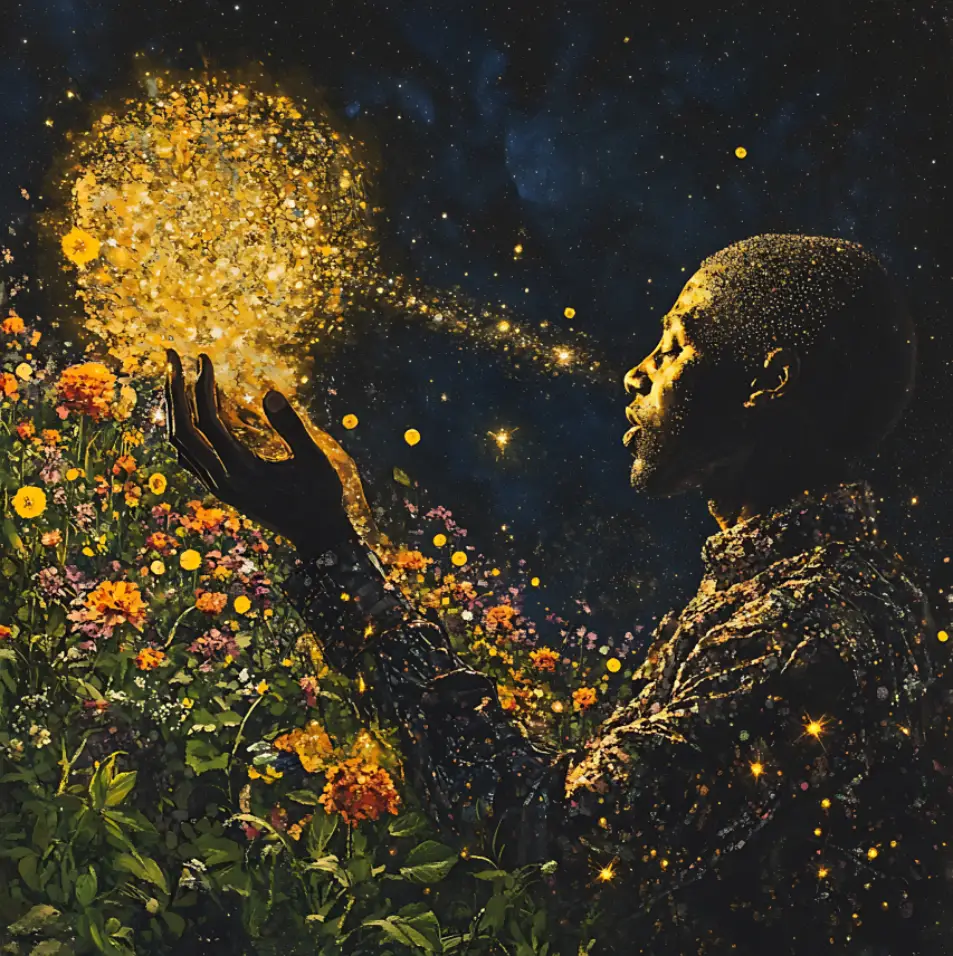

Why We Imagine: The Purpose of the Imaginative Mind
Unlike perception and memory — which clearly help us receive and store information — imagination can seem like something less serious, even unnecessary. Yet the scientific evidence suggests imagination is not unnecessary. It is a biological necessity, central to human survival, adaptation, and everything we are capable of. It is a biological necessity, central to human survival, adaptation, and flourishing.
What Is Imagination?
Researchers define imagination as “the capacity to mentally transcend time, place, and/or circumstance to think about what might have been, plan and anticipate the future, create fictional worlds, and consider remote and close alternatives to actual experiences” (Abraham, 2016). Imagination involves turning the brain inward to mentally generated representations decoupled from the immediate external environment (Schacter et al., 2012). It is a neurological reality — lodged in specific parts of the brain, consisting of identifiable components and processes, and serving clear adaptive functions (Abraham, 2016).
The Core Purposes of Imagination
1. Mental Time Travel and Simulation
Imagination allows us to mentally “time travel” — to revisit the past, envision the future, and explore hypothetical scenarios (Schacter et al., 2007). This ability, known as simulation, lets us “play out hypothetical experiences in the mind’s eye” and vicariously sample a vast range of scenarios and possibilities (Szpunar et al., 2014). It is an intrinsic “look before you leap” mechanism (Seligman et al., 2013).
Simulation serves several adaptive functions:
Decision-Making
Imagination creates representations of value that shape our choices (Seligman et al., 2013). By simulating potential outcomes, we can evaluate which option is most likely to lead to a positive result — effectively making better decisions without having to experience each possibility in real life.
Social Understanding
When we imagine what others might be thinking or feeling, we are using simulation (Buckner & Carroll, 2007). This ability — often called perspective-taking — activates the same neural circuits as experiencing the situation firsthand, allowing us to understand and empathize with others.
Planning
Imagination allows us to replay past experiences and extract information that can be used to plan for the future (Schacter et al., 2007). This process, known as episodic future thinking, enables us to anticipate challenges and prepare responses in advance.
Vicarious Learning
By imagining scenarios — both positive and negative — we can sample a vast range of possibilities and evaluate what is safe, beneficial, or dangerous (Seligman et al., 2013). This allows us to learn from imagined outcomes without needing to experience them directly.
Counterfactual Thinking — Learning from “What If”
One of the most common uses of imagination in adulthood is counterfactual thinking — mentally replaying past events while varying one or two critical details (Roese, 1997). Research shows this habit is “core to the human experience” (Roese & Epstude, 2017).
How counterfactuals work:
-
Upward counterfactuals — imagining a better alternative to a bad event (“Had I studied harder, I would have passed”). These tend to elicit regret and motivate future improvement (Roese, 1997).
-
Downward counterfactuals — imagining a worse version of a good outcome (“Had I missed that shot, we would have lost”). These tend to elicit relief and gratitude (Roese, 1997).
Counterfactual thinking helps us learn from mistakes. In one study, participants who reflected on what they might have done differently performed better on subsequent similar tasks (Epstude & Roese, 2008). However, counterfactual rumination can also become maladaptive, as seen in cases of trauma survivors haunted by “what if” scenarios (Roese & Epstude, 2017).
Emotional Generation and Regulation
Imagination is a powerful vehicle for generating and regulating emotions (Kross et al., 2009). About two-thirds of self-generated thought is emotional in nature (Killingsworth & Gilbert, 2010). Emotional imagination allows us to simulate both positive and negative experiences — from the joy of celebrating a milestone to the sorrow of mourning a loss.
Key functions:
-
Anticipatory emotions — experiencing fear, excitement, or anxiety about an imagined future event (Seligman et al., 2013)
-
Anticipated emotions — simulating how we would feel if a future scenario occurred (Baumeister et al., 2007)
-
Emotion regulation — using imagination to modify emotional responses (Kross et al., 2009)
Imagination is so powerful that an imagined stimulus can acquire emotional responses when paired with an actual aversive stimulus (Phelps et al., 2018). Conversely, repeatedly imagining a feared stimulus without the actual danger can reduce the fear response — a finding with significant therapeutic potential (Raes et al., 2012).
Social Cognition and Perspective-Taking
Imagination enables us to understand others’ minds — a capacity known as perspective-taking or Theory of Mind (Buckner & Carroll, 2007). By simulating others’ thoughts, feelings, and intentions, we can empathize and navigate complex social relationships (Singer, 2006).
Key functions:
-
Empathy — imagining how others feel (Singer, 2006)
-
Moral reasoning — evaluating ethical alternatives through imagination (Greene et al., 2001)
-
Social prediction — anticipating others’ reactions (Buckner & Carroll, 2007)
Perspective-taking is crucial for social cooperation, empathy, and moral judgment. It is a core process of imagination that helps us understand both ourselves and others (Buckner & Carroll, 2007).
Creativity and Innovation
Imagination lays the foundation for creativity (Abraham, 2016). Yet imagination alone is insufficient to produce creativity — imaginative thought must be “infused into mental simulations that are regulated, evaluated, and integrated to conjure new ideas and concepts” (Abraham, 2016).
Two types of imagination relevant to creativity:
-
Social-emotional imagination — the ability to conceive of and reflect on multiple social perspectives (Abraham, 2016)
-
Temporal imagination — mental time travel, counterfactual thinking, and mind-wandering (Abraham, 2016)
Creativity in science, art, engineering, and philosophy depends on the capacity to generate new combinations of ideas — a core function of imagination (Beaty et al., 2016).
Survival and Adaptation
Imagination has been “a major causal factor in making Homo sapiens the dominant species on earth” (McGinn, 2004). The capacity for imagination played a crucial role in constructing effective stone tools, early manifestations of religious behavior, global migration, and behavioral modernity (McGinn, 2004).
According to evolutionary theorist Colin McGinn, imagination was not “just a gratuitous excrescence that added to our enjoyment of life (art, literature, the opera)”; it was “a biological necessity, what stood between us and extinction” (McGinn, 2004).
The Neural Basis of Imagination: Key Brain Regions
The brain’s default mode network (DMN) has been identified as the neurological locus of imagination (Buckner et al., 2008). When the brain is not engaged in specific tasks requiring external attention, it defaults to activity in this well-defined neural network — which uses a substantial proportion of the brain’s total energy (Raichle et al., 2001).
The DMN consists of several key regions that work together to support imaginative thinking.
1. The Medial Prefrontal Cortex
The medial prefrontal cortex (mPFC) is located at the very front of the brain, just behind the forehead. It is part of the brain’s “executive center” and is responsible for self-referential thought — thinking about ourselves, our personality, and our personal experiences (Buckner et al., 2008). It plays a central role in:
-
Imagining how a scenario might relate to us personally
-
Making judgments about ourselves and others
-
Social cognition and perspective-taking (Buckner & Carroll, 2007)
2. The Posterior Cingulate Cortex
The posterior cingulate cortex (PCC) is located in the middle of the brain, near the back, just above the corpus callosum that connects the two hemispheres. It is one of the most metabolically active regions in the brain and is involved in:
-
Retrieving autobiographical memories (memories of our own life experiences)
-
Emotional processing
-
Integrating information from memory with present experience (Buckner et al., 2008)
When we imagine future scenarios, the PCC helps retrieve relevant past experiences that can be recombined into new simulations.
3. The Lateral Parietal Cortex
The lateral parietal cortex is located on the sides of the brain, near the top and back. It is involved in integrating sensory information from different modalities (vision, hearing, touch) into coherent mental representations (Buckner et al., 2008). It helps:
-
Construct detailed mental images
-
Recombine stored knowledge into novel scenarios
-
Maintain attention during imaginative thinking
4. The Medial Temporal Lobes (Including the Hippocampus)
The medial temporal lobes are located deep inside the brain, on the inner side of each temporal lobe (near the ears). This region contains the hippocampus, a seahorse-shaped structure critical for memory formation and retrieval (Buckner et al., 2008).
The hippocampus is essential for imagination. Research shows it plays a central role in:
-
Constructing new mental scenarios by recombining stored memories
-
Imagining future events
-
Mental time travel — revisiting the past and envisioning the future (Schacter et al., 2007)
A remarkable 2025 study published in Nature demonstrated that the human hippocampus can voluntarily generate new, imagined trajectories during sleep, effectively constructing novel paths for navigation that had never been experienced (Nature, 2025). This suggests the hippocampus is not just a memory store — it is a “creativity engine” that actively constructs possible futures.
5. Subcortical Regions: The Amygdala
The amygdala is a small, almond-shaped structure located deep within the temporal lobes, just in front of the hippocampus. It is the brain’s emotional center, responsible for:
-
Processing emotional significance of events
-
Generating fear and anxiety responses
-
Attaching emotional weight to imagined scenarios (LeDoux, 2000)
When we imagine frightening or exciting scenarios, the amygdala becomes activated, making those imagined experiences feel emotionally real.
How These Brain Regions Work Together
These regions do not work in isolation. When you imagine a future scenario — for example, imagining a job interview — a complex network activates:
- The hippocampus retrieves memories of past interviews and related experiences (Schacter et al., 2007)
- The medial prefrontal cortex evaluates how this scenario relates to you personally (Buckner & Carroll, 2007)
- The posterior cingulate cortex integrates emotional memories and personal meaning (Buckner et al., 2008)
- The lateral parietal cortex constructs detailed mental imagery of the scene (Buckner et al., 2008)
- The amygdala attaches emotional significance — generating feelings of excitement, anxiety, or confidence (LeDoux, 2000)
This network is collectively known as the default mode network because it becomes active when our minds wander away from the present moment (Raichle et al., 2001).
Core Processes of Imagination
Researchers identify three core processes of imagination (Buckner & Carroll, 2007):
-
Simulation — Mentally representing scenarios not currently perceived. This allows us to play out hypothetical experiences and prepare for future events.
-
Mental Time Travel — Recalling the past and envisioning the future. This enables us to learn from experience and plan ahead.
-
Perspective-Taking (Theory of Mind) — Simulating others’ thoughts, feelings, and intentions. This allows us to empathize and navigate social relationships.
Conclusion
The scientific evidence points to a clear conclusion: imagination is not a luxury — it is a biological necessity. It enables us to simulate possibilities, regulate emotions, understand others, solve problems, and adapt to an ever-changing world. Imagination is “a neurological reality” — a faculty that defines what it means to be human and has been crucial to our survival and success as a species (Abraham, 2016; McGinn, 2004).
References
-
Abraham, A. (2016). The imaginative mind. Human Brain Mapping, 37(11), 4197–4211.
-
Baumeister, R. F., Vohs, K. D., & Oettingen, G. (2007). Pragmatic prospection: How and why people think about the future. Review of General Psychology, 20(1), 3–16.
-
Beaty, R. E., Benedek, M., Silvia, P. J., & Schacter, D. L. (2016). Creative cognition and brain network dynamics. Trends in Cognitive Sciences, 20(2), 87–95.
-
Buckner, R. L., & Carroll, D. C. (2007). Self-projection and the brain. Trends in Cognitive Sciences, 11(2), 49–57.
-
Buckner, R. L., Andrews-Hanna, J. R., & Schacter, D. L. (2008). The brain’s default network. Annals of the New York Academy of Sciences, 1124(1), 1–38.
-
Epstude, K., & Roese, N. J. (2008). The functional theory of counterfactual thinking. Personality and Social Psychology Review, 12(2), 168–192.
-
Greene, J. D., Sommerville, R. B., Nystrom, L. E., Darley, J. M., & Cohen, J. D. (2001). An fMRI investigation of emotional engagement in moral judgment. Science, 293(5537), 2105–2108.
-
Killingsworth, M. A., & Gilbert, D. T. (2010). A wandering mind is an unhappy mind. Science, 330(6006), 932.
-
Kross, E., Davidson, M., Weber, J., & Ochsner, K. (2009). Coping with emotions past. Social Cognitive and Affective Neuroscience, 4(1), 93–100.
-
LeDoux, J. E. (2000). Emotion circuits in the brain. Annual Review of Neuroscience, 23(1), 155–184.
-
McGinn, C. (2004). Mindsight: Image, Dream, Meaning. Harvard University Press.
-
Nature. (2025). Hippocampal dynamics of imagined navigation. Nature.
-
Phelps, E. A., Lempert, K. M., & Sokol-Hessner, P. (2018). Emotion and decision making. Annual Review of Psychology, 69, 349–374.
-
Raes, F., Hermans, D., & Williams, J. M. G. (2012). The effects of emotion on mental imagery. Cognition and Emotion, 26(3), 431–441.
-
Raichle, M. E., MacLeod, A. M., Snyder, A. Z., Powers, W. J., Gusnard, D. A., & Shulman, G. L. (2001). A default mode of brain function. Proceedings of the National Academy of Sciences, 98(2), 676–682.
-
Roese, N. J. (1997). Counterfactual thinking. Psychological Bulletin, 121(1), 133–148.
-
Roese, N. J., & Epstude, K. (2017). The functional theory of counterfactual thinking. Psychological Review, 124(1), 1–24.
-
Schacter, D. L., Addis, D. R., & Buckner, R. L. (2007). Remembering the past to imagine the future. Nature Reviews Neuroscience, 8(9), 657–661.
-
Schacter, D. L., Addis, D. R., Hassabis, D., Martin, V. C., Spreng, R. N., & Szpunar, K. K. (2012). The future of memory. Neuron, 76(4), 677–694.
-
Seligman, M. E. P., Railton, P., Baumeister, R. F., & Sripada, C. (2013). Navigating into the future or driven by the past. Perspectives on Psychological Science, 8(2), 119–141.
-
Singer, T. (2006). The neuronal basis and ontogeny of empathy and mind reading. Neuroscience and Biobehavioral Reviews, 30(6), 855–863.
-
Szpunar, K. K., Spreng, R. N., & Schacter, D. L. (2014). A taxonomy of prospection. Psychological Review, 121(1), 1–24.