
The Breath as a Portal to Imaginative Worlds
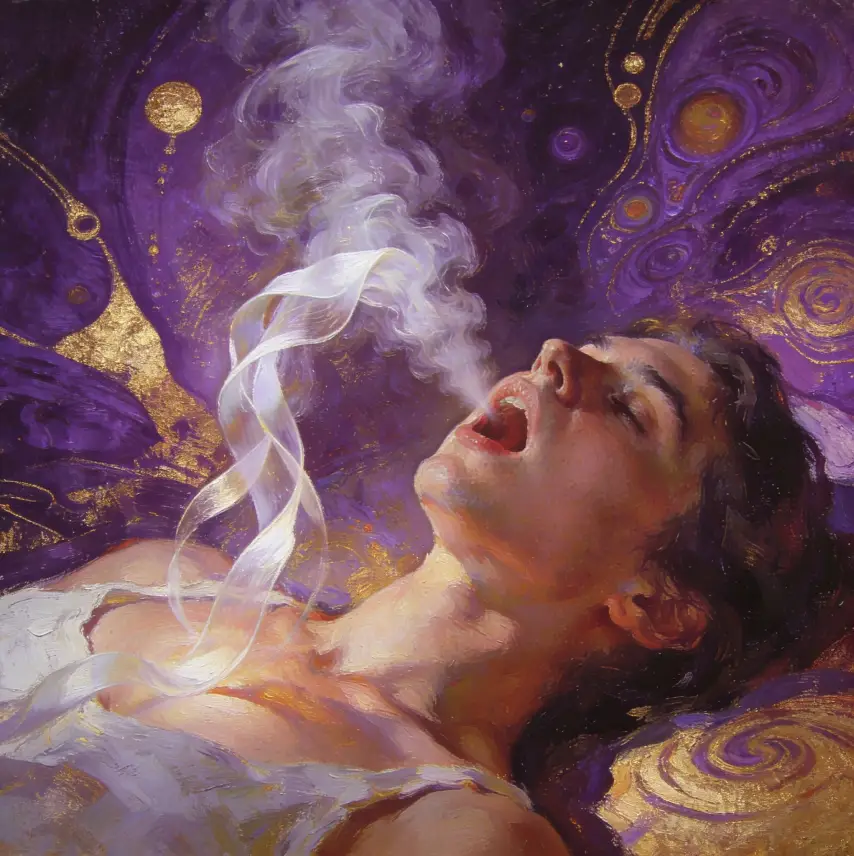
When we breathe deeply for an extended time, we may notice the threads of coherent thought beginning to fray. The things we just did, the words spoken moments ago, the plans we strive to grasp for tomorrow—they all gradually lose their sharp edges. In their place, a vast inner landscape of images and scenes begins to expand, calling us home.
There is a profound longing in this shift. We might find ourselves suddenly in flight, gliding through clouds or over ancient landscapes, forests, and silent cities—drawn toward somewhere we belong. Or perhaps we find ourselves in quiet encounters with people, or other beings, that feel more real than the air we breathe. At times, the breath pulls us back into the sanctuary of memory—returning us to the same rooms and faces from years ago, touching situations we recognize with a new, tender clarity.
Feelings awaken and drift like tides. Through the breath, we find the strength to remain present as the heart shifts—from the depths of sorrow and frustration to the soaring heights of joy.
This happens as the inner critic grows faint and the analytical mind finally rests. For some, this voice never fully vanishes; for others, it lets go completely. It is a surrender that can feel haunting to some, yet exquisitely liberating to others. We drift between worlds—awake on one level, in a deep trance on another—no longer burdened by the exhausting task of holding the experience together. We simply are.
What You Will Discover Here
This article explores how deep breathing and breathwork touch our inner world of imagery—and why certain forms of breathing open a longing for memories, emotions, and imagination in ways that can be both healing and profound.
You will gain a cohesive understanding of how different breathing patterns influence the nervous system, brain rhythms, and the birth of inner images—as well as when these experiences support deep integration and when they signal a need for more stability.
A Brief History of Breath as a Gateway to Alternative Worlds
Using the breath to alter consciousness is nothing new; it is an ancient longing to return to ourselves. In shamanic traditions, it has been a tool to open doors to trance, visions, and healing journeys. In the pranayama of yoga, the breath has been seen for thousands of years as a sacred bridge between body and soul.
In the 1960s, this connection was reawakened in the West, as researchers and seekers yearned to explore altered states of consciousness without the use of drugs. Stanislav Grof developed Holotropic Breathwork, where free breathing—through the nose or mouth—was combined with music and physical presence to evoke deep inner voyages. Simultaneously, methods like Rebirthing Breathwork emerged, focusing on releasing early traumas, often through circular mouth breathing.
Since then, a diverse tapestry of methods has flourished, from Wim Hof’s ice baths and powerful breaths to SOMA Breath and BBTRS. What they share is the belief that the breath does more than just affect the body—it opens a space where imagination, emotions, and consciousness can truly be transformed.
How We Breathe Shapes Our Reality
How we breathe does not only affect the body; it shapes how we experience our entire inner reality. The depth, rhythm, and path of the breath—whether through the nose or mouth—molds the state of the nervous system and, with it, our perception of thoughts, emotions, and inner imagery. In times of stress, the autonomic nervous system is activated, triggering a hormonal cascade (including adrenaline, noradrenaline, and cortisol) that shifts our heart rate, breath, and attention. Yet, when we consciously alter our breathing, we reclaim the power to influence this very regulation.
This means that different ways of breathing do more than produce physiological effects; they are invitations into different inner states. Some breathing patterns serve primarily to support regulation and stabilization, anchoring us in the present. Others act as a bridge to more altered experiences of the body, emotions, and the imaginative world—opening doors to places we may have long forgotten.
Key Distinction
Nose vs. Mouth: Nasal breathing acts as an anchor for stability, using the breath to regulate the nervous system and anchor the soul in the present. In contrast, circular mouth breathing is a “wave” that intentionally destabilizes the body’s chemistry to bypass the logical mind and enter a deep state of trance.
Different Forms of Deep Breathing Today
Today, a vast landscape of breathing techniques exists, ranging from still, yogic pranayama to the more powerful and rhythmic methods of modern breathwork. Although these techniques differ in intensity and form, their common thread is how they shift the balance of the nervous system, thereby altering our focus, emotional tone, and inner presence.
Deep Nasal Breathing – For Balance and Focus
The classic, slow deep breath through the nose has been used for millennia in yoga and meditation as a way to anchor the soul.
-
How to do it: Breathe in slowly through the nose, allowing the abdomen to expand. Exhale just as slowly through the nose. Maintain a rhythm of approximately 5–6 breaths per minute.
-
The Effect: Research shows that this breath activates the parasympathetic nervous system, increases Heart Rate Variability (HRV), and fosters a state of profound stability. It creates a quiet sanctuary, making it easier to hold focus on a single inner image without distraction.
Circular Deep Mouth Breathing – For Trance and Transformation
In methods such as Holotropic, Rebirthing, and BBTRS, deep circular breathing through the mouth is often used. Here, there is no pause between the inhalation and exhalation; the breath flows like an unending wave.
-
How to do it: Inhale deeply through the mouth, allowing the chest to fill. Exhale immediately, without pause, through the mouth. Continue in a steady, rhythmic flow.
-
The Effect: This form of breathing can trigger a more pronounced physiological response than slow nasal breathing and is experienced by many as deeply activating. As arousal and attention shift, participants often describe a longing that gives way to intense inner imagery, waves of emotion, and dreamlike states. (While research varies depending on the specific method, the link between stress physiology and altered bodily states is well-documented.)
What Does Brain Research Say? – Nose vs. Mouth
In recent years, research on breathing has begun to show that different ways of breathing change the brain in distinct ways. It is not merely a matter of oxygen and carbon dioxide, but of how the nervous system and brain waves are governed by the very rhythm of your breath.
Nasal Breathing – Regulation and Stabilization
Slow, deep breathing through the nose has been used for millennia within yoga, meditation, and contemplative traditions as a way to still the body and create inner stability.
Studies on slow nasal breathing, often around 5–6 breaths per minute, show that the body shifts toward a parasympathetic-dominated state: the heart rate drops, heart rate variability (HRV) increases, and levels of stress hormones decrease. At the brain level, an increase in Alpha waves (8–12 Hz) is frequently observed—waves associated with calm, stable attention, and mental filtering—particularly in the frontal cortex (areas involved in focus and volitional attention).
Research, such as the seminal study by Zelano et al. (2016), further highlights that inhaling through the nose specifically synchronizes electrical activity in brain regions linked to emotion and memory, such as the amygdala and hippocampus.
In some studies, a slight increase in Theta activity (4–8 Hz) also occurs (associated with inner imagery, daydreaming, and hypnagogic states), though this is not consistent. The overall picture is that slow nasal breathing primarily supports regulation, safety, and mental gathering, rather than deeper altered states of consciousness.
In short: nasal breathing helps the nervous system to land and provides a stable foundation for attention and inner presence.
Rhythmic Nasal Breathing and Retention – Altered States Without Mouth Breathing
Beyond slow, regulatory nasal breathing, there are forms of breathwork that utilize rhythm, tempo, and breath-holding (retention) to influence consciousness more tangibly—without the use of mouth breathing. This includes methods such as SOMA Breath, where nasal breathing is woven together with music, rhythmic patterns, and controlled breath pauses.
In studies of rhythmic breathing protocols involving retention, changes in brain activity have been observed that differ from simple slow nasal breathing. Among these findings, a decrease in Alpha activity (linked to everyday self-reference and mental “noise”) has been noted in parts of the Default Mode Network, including the posterior cingulate cortex (PCC)—a central node in the networks for self-reflection and inner narratives. Furthermore, an increase in Theta activity (associated with dreamlike states and inner imagery) has been reported in EEG studies of controlled rhythmic breathing (Tripathi et al., 2024).
In certain contexts, increased Gamma activity has also been observed in the insula—an area that integrates bodily signals, affect, and conscious presence—during breathing and attention-based protocols. This may contribute to a heightened sense of bodily experience and profound presence (Chen et al., 2025).
Taken together, these findings suggest that altered states of consciousness are not solely dependent on mouth breathing itself; rather, they can emerge even through the nose when rhythm, retention, and focused attention work in harmony.
Deep Mouth Breathing – Circular Breathing, Trance, and Release
In circular deep breathing through the mouth—used in methods such as Holotropic Breathwork, Rebirthing Breathwork, and Connected Breathing—one often observes a more potent physiological and perceptual response than in slow nasal breathing.
Here, there is no pause between inhalation and exhalation; the breath flows continuously and rhythmically. This type of breathing can profoundly alter carbon dioxide balance, arousal, and the activation of the nervous system, which in turn influences how experiences are processed within the body and brain.
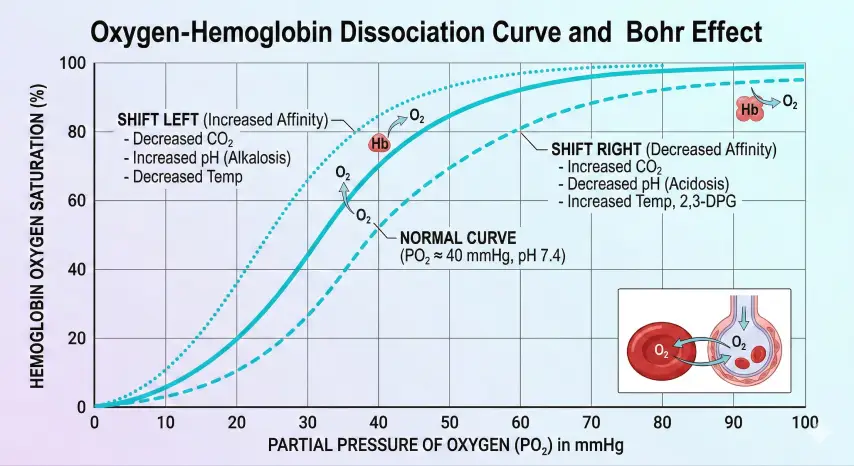
During circular deep mouth breathing, one exhales more carbon dioxide than the body can produce, leading to temporary hypocapnia. Because carbon dioxide acts as a central regulator of both cerebral blood flow and the activation level of the nervous system—where higher levels generally correlate with parasympathetic dominance and lower levels with sympathetic activation—this induces a distinct physiological shift. Blood vessels in the brain constrict slightly, cognitive control diminishes, and arousal increases, while perception and bodily presence are transformed. It is this cascade that creates the conditions for the intense experiences often reported during circular breathing (Ö. Bayrak et al., 2025).
In EEG studies of connected breathing-like protocols, changes in brain oscillations have been observed. These include decreased activity in certain frequency bands linked to everyday thinking and cognitive control, alongside increased activity in bands associated with presence and affective integration. These shifts occur particularly among more experienced practitioners and in parietal and temporal regions, which are involved in sensory integration and spatial orientation (Tripathi et al., 2024).
Subjectively, participants often report:
-
Vivid inner imagery and symbolic scenes.
-
Emotional release (crying, laughter, shaking).
-
Experiences of unity, shifts in meaning, and an altered sense of self.
These experiences often coincide with clear shifts in the brain’s rhythms and networks. A more detailed neurobiological explanation of why this amplifies imagination and inner imagery follows further down in the text.
Key Distinction
Chemistry vs. Deprivation: Trance in breathwork is driven by the Bohr Effect—a shift in blood pH that causes the brain to soften its executive control. It is not a result of oxygen deprivation, but a precise chemical invitation for the subconscious to take the lead over analytical thought.
Circular Deep Mouth Breathing as a Tool
There are many ways to use the breath as a tool—from the quiet rhythm of nasal breathing to yogic pranayama and mindfulness techniques. All have their strengths. However, when the goal is to reach deeper layers of the body and unlock the imagination, circular deep mouth breathing is often the most powerful entry point. Research does not suggest that mouth breathing is “better” in itself, but rather that it destabilizes the body’s homeostasis (CO₂, pH, and autonomic balance) to a higher degree than nasal breathing, which opens the door to more profound altered states of consciousness.
- Direct access to trance. Mouth breathing activates the nervous system more intensely than nasal breathing. It creates a shift where logical thinking recedes, and a more dreamlike consciousness emerges.
- Releasing for the body. Many carry tensions and emotions that have never been let go. When the breath circulates through the mouth without pause, the body can find ways to release what has been bound—in the form of shaking, heat, sighs, or tears.
- Imagination blooms spontaneously. Brain waves change in a way that makes inner images more vivid, coherent, and often symbolic. You can see, hear, and feel an inner world with an intensity reminiscent of a dream or a vision.
- From regulation to altered states. Nasal breathing is a fantastic tool for everyday calm. But mouth breathing is something else: a path to altered states where old patterns can dissolve and new perspectives can take root.
To choose circular deep mouth breathing is to choose a method that does not merely soothe—it transforms. It is a way to let the breath carry you further, deeper, inward—to the places where your imagination can open doors to healing and new paths forward.
Trauma Release Through Circular Deep Mouth Breathing
The body carries layers of experience. Stress that was never allowed to be released, emotions that were pushed aside, events that found no outlet—all of this can remain as tension, restlessness, or an inexplicable weight.
Circular deep breathing through the mouth can function as a key to these hidden layers. When breathing occurs without a pause between inhalation and exhalation, the body’s homeostasis is temporarily altered—particularly through changes in carbon dioxide balance and autonomic activation. This creates a state in which the system is both activated and opened.
The nervous system begins to move in rhythmic pendulation: inhalation and the rise in arousal support sympathetic activation (energy, heat, tingling), while exhalation and the continuation of the rhythm allow parasympathetic softening and release. In this oscillation, top-down cognitive control may lessen, while bodily and affective signals gain greater prominence.
From physiological activation to emotional integration
Within this pendulation, imagination often becomes more vivid. Images, memories, bodily sensations, and symbolic or dreamlike scenes may emerge—not as deliberate visualizations, but as spontaneous expressions of the nervous system reorganizing itself. It can feel as though analytical thinking steps aside, allowing deeper perceptual and emotional layers to come forward. Many describe reconnecting with feelings long held beneath awareness, or encountering inner imagery that gives new meaning to old patterns.
This process may lead to visible or subtle forms of release: a sigh, tears, trembling, warmth—or a quiet but unmistakable sense of relief. Research on rhythmic and circular breathing suggests that these experiences coincide with measurable shifts in brain rhythms and autonomic balance, creating conditions that may support emotional integration.
Integration, however, requires stability
Breathwork is not a substitute for trauma therapy or psychological treatment. While certain practices may support emotional processing, they should only be approached when one feels sufficiently resourced and stable. If strong or overwhelming reactions arise, working with a qualified professional is strongly recommended.
Why Imagination is Enhanced by Circular Deep Mouth Breathing – A Neurobiological Explanation
When you breathe rhythmically and deeply through the mouth, without pauses, a synergistic series of changes occurs within the nervous system and the brain, which together open the gates to vivid inner imagery. Beyond the shifts in autonomic balance and carbon dioxide levels, distinct changes arise in brain oscillations, influencing how inner images are experienced, organized, and felt within the body (Bayrak et al., 2025).
Alpha activity decreases in the Default Mode Network (DMN), particularly in the posterior cingulate cortex (PCC) and medial prefrontal cortex—areas linked to self-reference, internal narratives, and cognitive control. As Alpha is dampened, the continuous self-commenting and mental monologue diminish, often experienced as the “noise” of everyday life falling silent (Chan et al., 2024). This creates a sacred space for experience rather than analysis.
Theta activity increases in the PCC and adjacent networks. Theta dominates the threshold between wakefulness and sleep—the hypnagogic state where dreamlike images, memories, and symbolic scenes spontaneously arise. Elevated Theta activity has been linked in several studies to mental imagery, memory integration, and emotional processing (Holmes & Mathews, 2010).
Gamma activity increases in the insula. In some contemplative and breathing studies, increased Gamma activity has been observed in the insula—an area central to interoception and bodily awareness. When Gamma activity rises in this region, the experience of physical presence and affective integration may intensify, meaning inner images are not merely seen, but also felt physically—as warmth, pressure, movement, or a pulse (Lutz et al., 2015).
Together, these shifts create a functional constellation where:
-
Self-criticism and cognitive control are hushed (Alpha ↓).
-
Spontaneous imagery and memory access ignite (Theta ↑).
-
Bodily and affective presence deepens (Gamma ↑).
It is this specific combination that makes circular deep mouth breathing so effective at inducing powerful imaginative experiences. The body becomes a portal, the brain shifts its functional mode, and inner images can flourish with an intensity that—in the right context—can be both integrating and transformative (Schore, 2012; Brewin et al., 2010).
Key Distinction
The Brain’s Shift: Imagery blooms when the brain’s “inner critic” (Alpha waves) is hushed, allowing the subconscious dream-state (Theta) to merge with intense bodily feeling (Gamma). This shift transforms an inner image from something you merely “see” into a visceral experience you “feel” physically.
When Spontaneous Inner Images and Memories in Deep Breathing Become Healing – and When They Do Not
When inner images arise spontaneously in a state of sufficient inner stability—that is, when the body no longer perceives acute danger, even if emotions and physical energy are still present—it is often a sign that the nervous system has left its protective mode. One is not entirely “relaxed,” yet not overwhelmed either. There is space to remain within the experience without the need to flee, tense up, or shut down.
In this state, the brain is no longer preoccupied with controlling, analyzing, or suppressing what is felt. Instead, emotions, bodily sensations, and memory fragments can coexist in consciousness without competition. The experience can be held as a whole, rather than in fragmented parts that must be managed individually. It is in this state that integration becomes possible—when something can be felt, experienced, and then finally let go. (Holmes & Mathews, 2010; Schore, 2012)
Deep breathing can contribute to this in two distinct ways. Firstly, through slow, steady breathing, which gradually calms the nervous system and creates a sense of safety and presence in the body. Secondly, through more intense, circular breathing, which temporarily disrupts the body’s usual balance through changes in carbon dioxide and pH. This can diminish mental control and make the experience more direct and visceral, which in turn can open access to inner images and memories that are otherwise held back. (Gerritsen & Band, 2018; Fincham et al., 2023; Bayrak et al., 2025)
Conversely, when inner images arise in a state that feels overwhelming, compulsive, or uncontrollable—even during deep breathing—it is more often a sign that the nervous system is still in a defensive mode. In such moments, the body is attempting to protect itself rather than process. The images may feel intrusive, repetitive, or difficult to influence, and the experience often lacks a sense of coherence or relief afterward.
In these cases, the images do not signal that the system is ready to release; rather, they signal a longing for more stability and safety first—for example, through a slower tempo, shorter sessions, or the presence and support of another person.
This way of understanding the difference between integrating and intrusive imagery closely aligns with how trauma and anxiety research distinguishes between processing and overload. (Brewin et al., 2010; Chan et al., 2024)
Key Distinction
Processing vs. Overload: Healing occurs within the “Window of Tolerance,” where the nervous system feels safe enough to integrate difficult emotions. If imagery becomes intrusive or frightening, it is a signal that the system is overwhelmed and requires more stability and a slower tempo before proceeding.
Case Study: Breath Opening the Body and the Imagination
John had long carried a diffuse inner tension. He functioned in his daily life but often felt disconnected from his emotions and his body. Whenever he tried to work with inner imagery or visualization, rarely did anything happen. The thoughts were there, but they lacked depth or grounding—as if something within him was holding back.
When he began working with circular deep mouth breathing, his experience shifted gradually. After a few minutes in the continuous rhythm, he felt his body begin to respond: warmth spread through his chest, his hands began to tremble slightly, and the breath took on a life of its own. Simultaneously, his mental tension began to fade, as if the need to understand and control was slowly letting go.
In this state, fragments of inner images, bodily memories, and emotions began to surface. There were no clear narratives at first, but rather sensations—a pressure in the chest, a heaviness in the stomach, a sorrow that had no language. The breath carried him through these shifts without him needing to steer them.
After a while, he experienced a clear release: tears, a deep sigh, and a feeling that something held tight for a long time was finally allowed to move. Only then did a quiet inner image emerge—a feeling of standing firmly on the ground, with more space within his body than ever before.
After the session, he described it like this:
“It was as if the body began to breathe by itself, and various images, memories, and feelings appeared. As they shifted, I understood it as letting go of old stress. Then, everything became quieter and clearer inside.”
In his case, the breath opened the body, and the imagination served as the stage for visual, sensory, and emotional information to unfold. The inner images that followed were a sign that the nervous system had let go and that the experience could be integrated—as a lived bodily experience rather than a mere mental exercise.
The Bridge to Practice
John’s journey shows us that the breath is not just a biological function, but a key that can unlock the body’s hidden language. When the analytical mind steps aside, the imagination steps forward to guide us toward what needs to be felt and integrated. If you feel called to explore this inner landscape yourself, the following exercise offers a gentle entry point into the world of circular breathing.
Stepping Into Practice: Circular Deep Mouth Breathing with Imagination
PLEASE NOTE: Before you begin, be aware that circular deep breathing can unlock intense physical and emotional experiences. For many, this happens gradually in manageable waves, but for some, material may surface that feels unexpected or overwhelming. If you feel the experience becoming difficult to hold on your own, it is wise to practice in shorter intervals or together with a guide who can provide a safe and grounding presence.
1. Preparation
-
Find your space: Sit or lie down comfortably in a place where you will not be disturbed.
-
Set an intention: Choose a simple inner image to work with—perhaps a place where you feel profoundly calm, or a situation you are longing for.
-
Create safety: Have a blanket nearby; the body’s temperature often shifts during deep breathwork.
2. Begin the Breath
-
Open the portal: Open your mouth softly, relaxing the jaw.
-
The Wave: Inhale deeply, allowing both the chest and the abdomen to expand.
-
The Circle: Exhale immediately without any pause. Let the breath flow out and back in like a continuous wave. Maintain a steady, rhythmic flow—visualize circles following one after another.
3. Let the Body Respond
-
Sensory awareness: After a few minutes, you may feel tingling, heat, or vibrations. This is a natural physiological response to the shift in CO₂ levels. Allow these sensations to exist without judgment.
-
Ride the emotion: If emotions surface, do not try to analyze them. Simply breathe through them—let the breath be the vessel that carries you.
4. Invite the Imagination
-
Enter the image: Once you have found your rhythm and the “mental chatter” begins to quiet, let your chosen inner image emerge. See it before you as if it were already real.
-
Engage the senses: Add layers to the image. What colors do you see? What sounds or scents are present?
-
Embody the vision: Feel it in your body. How does it physically feel to be in this image right now? Notice the expansion in your chest or the grounding in your limbs.
5. Closing the Session
-
Return to stillness: After 5–10 minutes, let your breath slowly return to its natural, quiet pace.
-
Integration: Rest for a few minutes with your eyes closed. Do not rush to get up.
-
Reflect: What image, feeling, or insight are you carrying with you from the session? You may wish to write it down to further anchor the experience.
The Horizon of Imagination
The imaginative world is as vast as it is deep—a constant presence within us, waiting for the right moment to reveal its treasures. Whether used for healing trauma, sparking creativity, or finding inner stillness, imagination is a versatile and profound ally.
The techniques described here are only the beginning. There are countless ways to navigate these inner waters, each offering unique paths toward self-discovery and transformation. In the coming articles, we will continue to dive deeper into these methods, exploring how we can consciously shape our inner reality to create a more integrated and vibrant life.
In the coming articles, we will continue to dive deeper into these methods, exploring how we can consciously shape our inner reality to create a more integrated and vibrant life. This journey inward is perhaps the most courageous exploration one can undertake, leading to a home that has always been there, waiting to be rediscovered.