
I imagine a flower standing on a meadow, its petals heavy and wilting. It draws water from the cold, dormant earth. Slowly, I become the flower; I feel my roots stretching, searching through the soil. The sunlight begins to warm my skin while the wind whispers, gently rocking my stem. Cool, life-giving water circulates within me.
I see the flower—and at the same time, I am the flower.
What is KIP / Symboldrama?
Katathym Imaginative Psychotherapy (KIP), also known as Symboldrama, is a method where the imagination becomes a bridge to the world of emotions. Developed by the German psychiatrist Hanscarl Leuner, it is built on the belief that inner images carry more than we first realize – they give a voice to that which is otherwise hard to put into words.
As a client in KIP, you close your eyes and imagine simple, often nature-inspired motifs: a meadow, a river, a mountain, or a house. These inner scenes are like canvases where emotions are projected.
-
The Flower: It may be experienced as fragile – reminding you of a side of yourself you may have suppressed – but that same flower can also convey joy as its petals unfold.
-
The Path: A trail might feel like a free way forward – or like a path that ends too soon, sparking the insight that you often experience life that way.
-
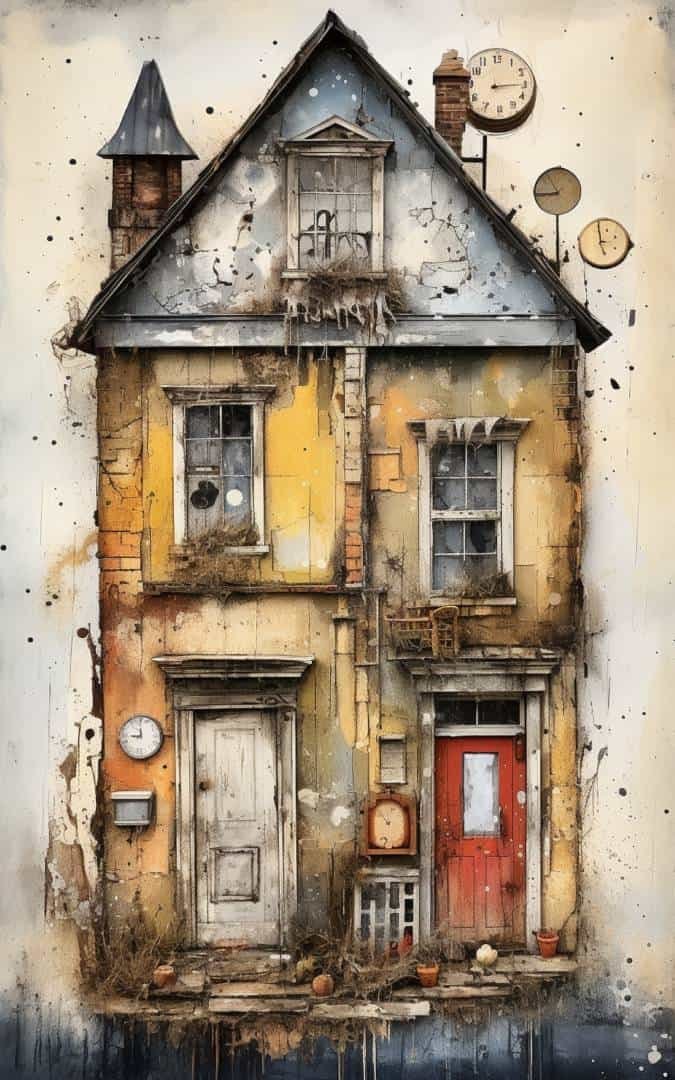
The House: It might first feel safe, reminiscent of childhood, but can suddenly contain hidden nooks that awaken new memories. A locked room emerges as a symbol for a stuck life situation – something within you longing to be opened.
The therapist’s role is to maintain focus within these inner images and help you explore what they awaken. In this way, the symbols become more than mere fantasies; they are living expressions of relationships, conflicts, and resources within the psyche – an imaginative path toward change and self-understanding.
Key Distinction
Symbols vs. Logic: In traditional therapy, we often use logic to solve problems. KIP shifts the focus from “thinking about” a feeling to “experiencing” it through a symbol. A symbol acts as a safe container for emotions that are too complex for words.
Roots in Psychoanalysis
KIP grew out of the deep traditions of psychoanalysis. At the dawn of the 20th century, Sigmund Freud was already using hypnosis, dream interpretation, and free association to reach the unconscious. His successors, such as Carl Gustav Jung, went further, developing methods like Active Imagination, where inner images and symbols became a vital path to self-knowledge. Other psychiatrists, like Ernst Kretschmer, emphasized the delicate dance between the body, emotion, and our subjective experiences. It was in this atmosphere of discovery—a longing to map the unseen territories of the mind—that Hanscarl Leuner began to explore the transformative power of imagination.
Leuner’s Path – From Experiment to Method
In the 1940s, Hanscarl Leuner began developing his method for catathymic imagery—inner scenes deeply colored by emotion. He called it Experimentelles Katathymes Bilderleben (EkB). The word catathymic is derived from the Greek (kata = according to, thymos = emotion), describing how every image carries an inherent feeling within it.
During the 1960s, Leuner also explored psychedelic therapies, where low doses of LSD were used to intensify the internal visual material. However, as the political and social climate shifted, he moved away from these substances, focusing instead on refining the method within purely clinical and meditative settings.
Eventually, he perfected the technique into what we now know as Katathym Imaginative Psychotherapy (KIP)—a method where inner landscapes, often inspired by the natural world, are explored in a relaxed yet present state. It is a journey taken together with a therapist, moving toward a clearer understanding of one’s own inner life.
KIP or Symboldrama – Names, Reach, and Evolution
From the 1950s onward, the method began to journey beyond Leuner’s own clinical environment. In countries like Germany, Austria, Switzerland, and Russia, it gradually took root, becoming an integral part of psychotherapeutic training and official treatment registries (Bahrke & Nohr, 2013). This expansion allowed the practice to become more systematic and grounded, while never losing its essential spark of openness and creativity.
The name Symboldrama emerged as a more accessible, pedagogical term. Although it wasn’t Leuner’s original coinage, it beautifully captured the heart of the method: the meeting between symbol and drama—a space where inner scenes are played out and explored with the support of a therapist. It speaks to the soul’s longing to act out what it cannot yet say.
A Global Tapestry of Terms
The name Symboldrama found a particularly strong resonance in parts of Eastern Europe and the Nordics. In Russia, the term Символдрама (Symboldrama) became the official designation, seeing a broad clinical and educational spread since the 1990s. Similarly, in Ukraine and the Baltic states, Symboldrama is the established name, often utilized within psychodynamic and relationally oriented therapies.
In contrast, German-speaking countries such as Germany, Austria, and Switzerland remain loyal to the formal title: Katathym Imaginative Psychotherapy (KIP). In English-speaking literature, this is also the primary term, sometimes appearing as Guided Affective Imagery (GAI).
Regardless of the name—whether we call it a “drama” of symbols or a “catathymic” journey—the direction remains the same: it is an invitation to step into the landscape of the self and move toward a more integrated, authentic life.
The Building Blocks of KIP
The imaginative work in KIP is built upon a few simple, yet profoundly powerful ingredients. They serve as a map for those longing to reconnect with their inner selves:
-
Emotionally Charged Inner Images In KIP, these are called catathymic—a word meaning “according to feeling.” When you close your eyes and let go, scenes emerge that feel both physical and emotional, as if the image itself is breathing with a specific feeling.
-
A Dreamlike Twilight State This is the hypnagogic state—a quiet space that is neither fully awake nor asleep. It is like standing in the dusk between day and dream, where the imagination begins to move of its own accord.
-
Free Associations You are invited to follow the images and thoughts as they arrive, without trying to steer them. It is like watching a single flower suddenly transform into an entire garden, leading you toward something unexpected yet vital.
-
Symbols That Speak to the Heart A flower, a house, a path—the same motif whispers different things to different people. These symbols carry layers far deeper than what the eye sees, opening doors to emotions that have long been waiting to be felt.
-
Nature as a Doorway The therapist may suggest a starting point—a meadow, a mountain, a stream—to give the imagination a place to land. It is like opening a gate to an inner world that is already there, waiting to be explored.
-
A Companion for the Journey The therapist does not interpret for you. Instead, they listen, ask gentle questions, and help you remain present in the experience. They are like a fellow traveler, keeping you company as you walk through an unknown forest.
How Symbol Interpretation Defines KIP as Psychodynamic
In KIP, inner images are far more than tools for relaxation or problem-solving. They are seen as vibrant expressions of unconscious conflicts, defenses, and relational patterns. This depth is precisely what gives the method its psychodynamic character.
When a person imagines a meadow, a mountain, or a house, these motifs are not interpreted literally or instrumentally. Instead, the image is viewed as a symbolic projection surface. Something within the psyche—often rooted in early relationships and unresolved conflicts—is projected onto the mental screen. The task is to remain within the image, allowing for free association, while listening for the emotions and relational themes that begin to stir.
The symbols are never reduced to clichés; a flower is not “just” a self-image. Instead, they are understood through the lens of classic psychodynamic concepts: transference, defense, regression, and object relations. The symbols are ports to the unconscious, not pre-packaged solutions.
Symbols as Gateways to the Unconscious
To understand how these internal scenes facilitate change, four concepts are particularly vital:
-
Transference: What you encounter in the image—a path, an animal, a locked door—can carry emotions that actually belong to past relationships. Just as a therapist can become a vessel for old feelings, the symbol becomes a stage where the past is projected and made visible.
-
Defense: If an image becomes blurred, if you suddenly feel sleepy, or if a symbol feels completely “empty,” it may be the psyche protecting itself from something painful. Noticing these defenses, without forcefully breaking through them, is a core part of the psychodynamic stance.
-
Regression: Symbols can open doors to early emotional layers. At times, it may feel like returning to a child’s perspective, where safety, fear, or longing become immediate and raw. This regression is not a setback; it is a path to deeper contact with the formative experiences of childhood.
-
Object Relations: In psychodynamic theory, our internal maps of relationships are called “object relations.” When you meet a figure in a symbolic scene—perhaps a knight, a parent, or a wild animal—it may be a manifestation of the relationships you carry within. Through these symbols, these inner bonds take a form that can finally be faced and processed.
Key Distinction
Projection over Interpretation: KIP does not use a “dream dictionary” approach where a house always means X. Instead, the image is a projection screen where your unique history and internal relationships come to life to be explored, not just categorized.
Central Symbolic Motifs in KIP – A Quick Guide
In the world of KIP, certain landscapes act as mirrors for our deepest interior states. Here is a guide to the most common starting points for this imaginative journey:
The Meadow
The initial gateway in KIP. It can evoke a sense of safety, openness, and “nowness,” but it can also feel empty, inviting, or chaotic. It serves as a projection surface for one’s current emotional state. In a psychodynamic sense, the meadow is often linked to the primary relationship with the mother or a deep-seated fantasy of being cared for.
The Flower
A symbol of self-image, growth, and inner resources. The flower’s shape, color, and vitality often reflect how we perceive our own worth and life force. A wilting flower may whisper of sorrow, fragility, or emotional detachment, while a blooming plant speaks of creativity, connection, and a longing for change.
The House
The architecture of the Self. Each room reflects aspects of identity, memories, or defended parts of the personality. Basements and attics often lead to repressed emotions, while open, sunlit rooms can reflect available inner resources and strengths.
The Mountain
A classic symbol of aspiration, achievement, and the father figure. Climbing the mountain can mirror the path toward self-realization, while obstacles or a foggy view may reflect ambivalence, self-doubt, or narcissistic wounds. It is a place where we encounter our inner critics and our highest ideals.
The Forest
The realm of the unconscious—shadowy, alluring, or threatening. Here, repressed fears and “shadow sides” are often projected. The forest symbolizes that which has not yet taken conscious form. Within its depths, transformation occurs through encounters with animals, mysterious figures, or forks in the path.
The Brook
Water symbolizes the emotional flow. A stream can show our access to feelings, but it can also reveal blockages or difficulties in emotional regulation. Wading through or following the water’s path can symbolize a desire for purification, a return to origins, or the longing for primal closeness found at the source.
Three Groups of Symbol Themes: Clarifying, Stabilizing, and Empowering
Through long-standing clinical experience, it has been observed that certain symbols possess a unique ability to awaken specific types of internal material. These images can bring hidden conflicts into the light, soothe overwhelming emotions, or help build the inner resources we so deeply long for. In practice, these motifs are often categorized into three functional groups: clarifying, stabilizing, and empowering (Friedrichs-Dachale & Ullmann, 2020).
Three Functions of Symbolic Motifs in KIP
In practice, these motifs are categorized into three groups, each serving a distinct purpose on the journey toward self-discovery:
-
Clarifying Motifs: Bringing the Hidden into the Light These images serve a clarifying role, surfacing what is often obscured in the noise of everyday life. A House may reveal which rooms of the self are open and which remain locked; a Path can show if the way forward feels free or blocked. The Forest may reflect deep-seated fears, while the Mountain often becomes a stage for goals, achievements, or nagging doubts. Even encounters with unknown figures can act as mirrors, reflecting inner conflicts or parts of ourselves we have not yet dared to meet.
-
Stabilizing Motifs: Finding Stillness and Grounding Other motifs function as stabilizing forces, inviting rest and grounding when emotions threaten to overwhelm. Imagining a sunlit Meadow, a Flower slowly unfurling its petals, or a Tree with deep, ancient roots can create a profound sense of safety and presence. Water imagery—a Brook, a River, or a Spring—often brings a feeling of cleansing and movement, as if carrying away a heavy burden to make room for recovery.
-
Empowering and Integrating Motifs: Building the Self The third group focuses on building and integrating the psyche, serving as vital resources to strengthen self-esteem and identity. A Garden can become a sanctuary for nurturing one’s inner life, while a Bridge symbolizes the integration of different parts of the self. A Journey or a Vehicle might reveal how one navigates through life—asking the vital question: am I steering, or am I merely following? An inner child or another gentle figure can awaken care for vulnerable parts of the soul, while a vast view from a Mountain Peak opens the heart to new perspectives and a sense of wholeness.
Key Distinction
Stability before Discovery: Before diving into difficult conflicts (Clarifying), KIP often focuses on building internal safety (Stabilizing). We strengthen the “inner meadow” before entering the “dark forest,” ensuring that healing happens at a sustainable pace.
Three Filters for Inner Change in KIP
In KIP, we often speak of three “filters” that manifest within our inner imagery—three distinct ways in which the imagination helps us transform: To Allow, To Receive, and To Create Anew. These filters are not steps on a linear journey; instead, they ebb and flow, forming a map of how the imagination carries us toward deeper self-knowledge and lasting change (Friedrichs-Dachale & Ullmann, 2020).
-
To Allow: Sometimes, images emerge that show exactly what we would rather avoid—a locked door, a dark forest, or a threatening figure. Daring to remain in that space can open the way for profound insight and healing.
-
To Receive: At other times, the images reveal exactly what we have been longing for—a warm spring, a gentle animal, or a kind, welcoming figure. Images that provide safety and closeness allow us to practice receiving what has been missing in our lives.
-
To Create Anew: And sometimes, something entirely new unfolds—a fresh path, vibrant colors, or a sudden sense of lightness. Images that invite play, movement, and creativity show us that change is truly possible.
These three filters are not steps on a linear journey; instead, they ebb and flow. At times we face the difficult, at other times we rest in the healing, and sometimes we step into the new. Together, they form a map of how the imagination carries us toward deeper self-knowledge and lasting change.
Transformation in Action – Six Paths to Inner Change
While KIP is fundamentally about allowing images to unfold freely, there are several recurring ways to work with them when the process needs support. These techniques, such as meeting the frightening or providing nourishment to a hostile figure, serve as living tools for transformation (Leuner, 1984). Here are six examples of how symbols can become living tools for transformation, meeting the soul’s longing for resolution:
- The Inner Guide At times, a figure appears—an animal, a person, or a presence—that seems to want to show the way. Following this guide can provide a sense of safety and ensure the journey moves at the right pace.
- Facing the Frightening Threatening figures do not always have to be avoided. By looking at them more closely, in detail, their overwhelming power can be transformed and made understandable.
- Providing Nourishment An angry or hostile figure can sometimes be soothed if you imagine giving it something it lacks—food, warmth, or care.
- Reconciliation What initially feels hostile may actually be longing to be accepted. A symbolic gift or a kind gesture can change the energy of the entire scene.
- Clearing the Blockage Sometimes symbols appear that simply block the way. In these moments, you can imagine them disappearing—being dissolved, burned away, or chased off to clear the path forward.
- Medicinal Fluids Spring water, ointments, or healing drinks are classic symbols of recovery. Bathing in, applying, or drinking these can become a powerful internal image of purification and renewal.
When is KIP Used?
For decades, Katathym Imaginative Psychotherapy (KIP) has been used to help individuals navigate emotional difficulties. Research indicates that the method can significantly reduce anxiety, alleviate depression, and strengthen self-esteem (Zagnitko et al., 2020; Stigler & Pokorny, 2012). It offers a way for those longing for balance to find a new path forward:
-
Anxiety and Worry: When worry feels overwhelming, symbolic images—such as a blocked path or a threatening forest—can give a tangible shape to the feeling, making it possible to address and transform.
-
Depression and Low Spirits: Inner images can mirror a sense of hopelessness, but they also have the power to awaken hope: a flower finally unfurling its petals or the sun breaking through a heavy mist.
-
Relational Struggles and Self-Criticism: Through symbols like closed doors or critical figures, deeply ingrained relational patterns become visible and, ultimately, possible to change.
-
Trauma and Difficult Life Experiences: KIP provides a gentle way to approach painful memories without the need to relive every detail. It allows for a safe exploration of emotions and defenses, moving toward healing at a pace the soul can handle.
Case Study: The Old Cardigan
Anna, a 42-year-old woman, sought therapy because she felt profoundly “stuck” in her life, burdened by a constant, heavy blanket of anxiety.
In one particular KIP session, she was invited to explore the image of a house. Initially, the house appeared welcoming and sunlit, but as she moved further into its hallways, she encountered a door that was firmly locked. The sight of the door triggered an immediate, visceral reaction; she felt the familiar, suffocating tightness of her anxiety—the feeling of being trapped in a life she couldn’t change. With the gentle, grounding presence of the therapist, Anna chose not to turn away. She stayed with the image, and in the silence of that locked door, she felt the first echoes of a childhood defined by a vast, quiet loneliness.
With the therapist’s support, Anna found the courage to reach for a key and unlock the door. Inside was a small, forgotten room, and there, draped over a chair, was an old knitted cardigan that had belonged to her late grandmother. In her mind’s eye, the scene became vivid: she could feel the slight coarseness of the wool against her skin and catch the faint, nostalgic scent of her grandmother’s home.
As she wrapped herself in the cardigan, the “locked” feeling in her chest began to dissolve. The anxiety transformed into a wave of grief—a sorrow for the little girl who had been so alone, but also a profound warmth from the memory of the one person who had truly seen her. This moment was the turning point; it allowed her to finally touch and release the isolation she had carried for decades.
Through subsequent sessions, as she continued to meet new symbols and discover untapped inner resources, Anna’s sense of abandonment began to lift. She didn’t just feel “better”—she began to feel truly alive and connected to her own history.
The Horizon of the Possible – In the Living Field of Imagination
As we have explored, internal imagery is far more than a clinical intervention; it is a fundamental human faculty. While modern psychology provides us with the evidence-based rigor to heal our shadows through CBT and Third-Wave methods, this is only the beginning of the journey.
When we reclaim the language of the mind’s eye, we don’t just learn to manage distress—we unlock the capacity to consciously shape our future. The same mechanisms that allow us to rescript a painful memory also enable us to envision new realities, cultivate spiritual depth, and manifest our deepest intentions.
Healing the past is the foundation; inhabiting your potential is the path forward.
Explore Further:
-
Ready to move beyond healing and into creation? Discover our guides on [Manifestation and the Creative Mind].
-
Interested in the intersection of imagery and the sacred? Read more in [Spirituality and the Internal Landscape].
-
For more deep dives into the mechanics of the mind, visit our full library at [Imagination.gold].
Reflection: The Balance Between Imagination and Dialogue
KIP is used successfully in many countries, even though the body of research remains more limited compared to some other therapeutic models (Bahrke & Ullmann, 2021). One recurring discussion within the field concerns the delicate balance between the imagination itself and the verbal dialogue that surrounds it.
Hanscarl Leuner originally emphasized that the greatest transformative power lies within the imagery work itself (Leuner, 1984). In more recent practices, however, the conversation between the therapist and the client has often taken a more prominent role. This shift offers clear advantages: the relationship creates a sense of safety, and when transferences and projections are discussed openly, the dialogue becomes a path toward healing. Furthermore, talking helps the client bridge the gap between their inner symbols and their actual life history. In contemporary KIP, the exploration of transference and countertransference processes is considered a vital part of the therapeutic work (Friedrichs-Dachale & Ullmann, 2020).
At the same time, one might speculate on the unique value of returning to a more “Leunerian” approach—where the therapist interacts less, allowing the inner world to operate on its own terms. There is a risk that if words take over too early, the imagination is reduced to a mere illustration of a verbal process, potentially losing its raw, transformative strength.
Perhaps the true power of KIP lies in this very tension: the therapeutic benefit of being seen and mirrored in conversation, balanced with the profound autonomy of meeting one’s emotions, symbols, and resources directly. By leaving more space for the internal scenes to breathe, the healing can unfold in a way that feels deeply vivid and personal, occurring within an inner room where the therapist acts as a silent witness rather than a director.
Stepping Into Practice: Step by Step: A Journey into Your Inner House
This exercise is an invitation to meet yourself. Approach it with curiosity and gentleness, allowing the images to find you rather than trying to create them.
1. Preparation: Settling into the Stillness
Find a comfortable position where you can remain undisturbed. Gently close your eyes. Begin by following your breath—don’t try to change it, just observe the natural rhythm. Spend about a minute letting the outside world fade away as you settle into your body.
2. The Emergence: Let the House Reveal Itself
When you feel ready, imagine a house. It might be a house you know, or one you have never seen before. Do not force a specific image; simply wait and see what kind of building emerges from the mist of your imagination.
3. The Threshold: Noticing the Exterior
Observe the house from a distance. Look at the facade, the garden, and the path leading to the door. Notice the atmosphere. How do you feel as you stand there? Is there a sense of longing, a spark of curiosity, or perhaps a slight hesitation? Let every feeling be welcome.
4. The Entry: Crossing the Border
Slowly approach the door. Notice its texture and color. In your imagination, try to open it. If it is unlocked, feel the transition as you step inside. If it is locked, do not force it—simply notice the sensation of being held back. What is the temperature inside? Is the air still and safe, or does it feel empty and cool?
5. The Exploration: Wandering Through Your Inner Architecture
Walk through the rooms at your own pace. Notice which areas draw you in and which ones you feel an urge to avoid. Are there stairs leading up to an attic of forgotten thoughts, or down to a basement of hidden emotions? Pay attention to the light and the shadows in each space.
6. The Encounter: Meeting the Figures Within
As you wander, you might encounter a figure—perhaps a child, a parent, or a stranger. Do not analyze them immediately. Instead, notice the physical sensation in your body as you stand near them. What does your heart feel? What does your breath tell you?
7. Reflection: Bringing the Insight Back
Before you leave, stand in the center of the house and ask silently: “What do you want to show me right now?” Wait for a word, a color, or a single sentence to emerge. Take that gift with you as you slowly open your eyes. Write down 3–5 lines about your experience to ground the insight in the present moment.
The Beginning of an Inner Journey
Katathym Imaginative Psychotherapy (KIP) is more than just a clinical method; it is an invitation to honor the soul’s longing for expression and wholeness. By stepping into our inner landscapes, it becomes clear that the imagination is not a mere escape from reality—it is a powerful, living resource for transformation. When inner images are allowed to breathe, the process of healing can truly begin.
The world of the imagination is vast, and KIP is only one of many ways to explore its profound potential. Understanding the language of symbols and the rhythm of internal scenes can open doors previously unknown, leading toward a life that feels more integrated, authentic, and alive.
Discover More About the Power of Imagination There is much more to explore regarding the transformative power of the mind—from its role in personal growth to its ability to heal deep-seated emotional wounds. Feel free to explore the additional articles and resources available here to continue the journey through the landscapes of the inner self.