

The Paradox
Why does your mouth water at the thought of a lemon? Why does your heart race during a nightmare, even though you are safely in bed? The paradox of imagination lies in its power to override our current environment. You can be sitting in a safe, quiet room, yet your pulse can skyrocket simply because of an internal image.
This happens because your brain isn’t just ‘fantasizing’—it is simulating a real biological event. To your nervous system, a vivid internal simulation is almost indistinguishable from an external event. Research in cognitive neuroscience shows that mental imagery activates many of the same neural systems involved in actual perception; when you vividly imagine, your brain’s visual areas and emotional circuits fire in patterns that look almost exactly like a real-life experience (Pearson et al., 2015).
In this exploration, we will examine how this biological mechanism serves as a precision tool for healing, performance, and self-integration.
Expanding the Definition: Imagination as a Total Biological Event
To understand the power of imagination-based work, we must move beyond the common misunderstanding that imagination is merely “fantasy” or “make-believe.” In the context of this framework—and supported by modern cognitive science—we define imagination as the brain’s capacity to generate sensory-affective experiences in the absence of external input.
This means that imagination is not just what you choose to see; it is the biological mechanism behind:
-
Anxiety: When the brain’s ability to simulate the future becomes stuck in “worst-case scenarios.”
-
Traumatic Flashbacks: When past sensory experiences intrude into the present, feeling as real as they did then.
-
Spontaneous Wandering: When the mind drifts away from the here and now into memories, dreams, or future plans.
-
Deliberate Visualization: When we intentionally use our inner eye to rehearse a skill, solve a problem, or find a sense of calm.
Imagination: The Brains Predicting Engine
This broader view is supported by the theory of Predictive Processing. Researchers like Andy Clark and Karl Friston suggest that the brain is not a passive receiver of information, but a “proactive prediction engine.” It constantly creates internal models—simulations—to anticipate the world.
When these internal models are disconnected from immediate sensory input, we call it imagination. But for the nervous system, the difference is academic: the physiological impact of a “simulated” threat (anxiety) is nearly identical to a “real” one. By acknowledging that anxiety and trauma are, at their core, disordered or involuntary imaginal processes, we open the door to using the same machinery for healing.
If imagination is the “code” through which our nervous system interprets reality, then working with imagination is the most direct way to access and update that code.
Key Distinction
Outdated Maps vs. Current Reality Anxiety is often the brain using an old, painful “map” (memory) to predict a future that hasn’t happened yet. Imagination work is the process of updating that map with new, sensory-rich data so the brain can predict safety instead of threat.
Where Imagination Arises: Top-Down and Bottom-Up Dynamics
Imagination is a sophisticated coordination between different neural pathways. To understand why imagination can feel so overwhelming—or so liberating—we must look at the dance between top-down and bottom-up dynamics. It unfolds through the interaction of bottom-up processes driven by emotion and bodily signals and top-down processes shaped by attention, intention, and executive control.
In lived experience, these pathways rarely operate in isolation.
Top-Down: The Editor (Voluntary and Regulated)
When we deliberately imagine — visualizing a future scenario, rehearsing a conversation, or restructuring an inner image — we engage prefrontal and frontoparietal control networks, particularly the dorsolateral prefrontal cortex.
These regions support:
-
attentional focus
-
working memory
-
impulse control
-
goal-directed planning
Through these systems, imagination becomes structured, guided, and modifiable (Pearson et al., 2015).
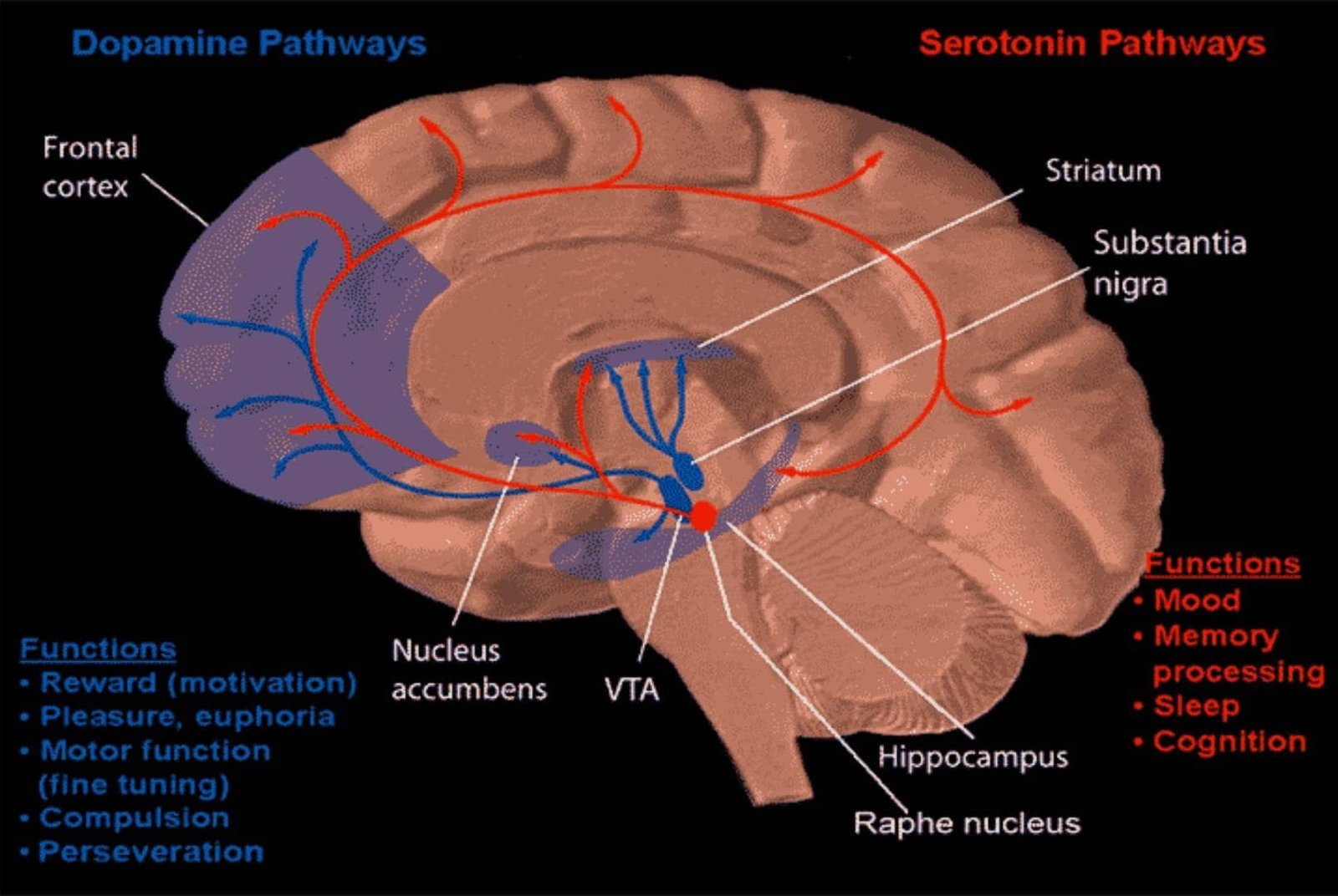
For example, it helps maintain focus on a specific internal scene and inhibits intrusive thoughts that might otherwise distract us. It also logically “edits” the content of our imagination to explore new solutions.
Top-down processes allow us to hold an image in mind, reshape it, or inhibit competing thoughts. They provide regulatory influence over internally generated material.
Bottom-Up: The Processes That Generates the Film (Spontaneous and Affective)
Imagination may also emerge often spontaneously, without deliberate choice. A memory surfaces. A mood shifts. An image appears.
These processes are closely linked to limbic and subcortical systems, including:
-
the amygdala (emotional salience). Assigns emotional weight to images.
-
the hippocampus (memory reconstruction). Provides the raw sensory material from our past.
-
insular regions (interoceptive bodily awareness). Connects the image to our “gut feelings” and bodily state.
Bottom-up activation often begins with a bodily signal—a tightening in the chest or a wave of warmth—which then “recruits” an image to explain the feeling. In states of trauma, high anxiety, or even creative “flow,” these bottom-up dynamics can dominate, making the internal experience feel involuntary and intensely “real”(Holmes et al., 2007).
The Structure of Imagination: From Late-Night Worry to Conscious Change
To understand how imagination works, we can think of it like a symphony: a single instrument isn’t the music, but when they play together, a melody emerges. These neural systems are active during almost every moment of our lives, regardless of whether the content is productive or painful.
Whether you are waking up in the middle of the night ruminating over a past mistake, or daydreaming about the sensory details of an upcoming vacation, the exact same four networks are at play. They are the universal building blocks of your internal life. By understanding this shared machinery, we can learn to act as “conductors”—intervening in how these systems communicate to shift from involuntary worry to intentional resource-finding.
1. Emotional Salience (The Salience Network)
Centered in the amygdala, this system determines what is important. In imagination, this is the “charge” or “heat” of an image. It’s why a worry about a deadline feels like a biological emergency (high salience), while imagining the sun on your face during a holiday feels like a warm, relaxed invitation.
2. Memory Networks (The Hippocampal-Entorhinal Complex)
Imagination is essentially memory reorganized. Using the hippocampus, the brain retrieves “raw data”—past sights, sounds, and feelings—and stitches them together into new patterns. This is how you “pre-construct” your vacation before you’ve even packed, or how your brain “re-constructs” a past conflict during a late-night worry session.
3. Bodily Information (Interoception)
This is the “visceral” part of imagination. Through the vagus nerve, your brain is in a constant dialogue with your body. It is why an anxious thought makes your heart race or your stomach knot, and why a pleasant fantasy about a future meal can actually make your mouth water.
4. Executive Control (The Central Executive Network)
Located in the prefrontal cortex, this is the “librarian” that holds the image steady. It allows you to stay with a helpful visualization or, when working correctly, helps you “switch the channel” when a worry becomes too intense or repetitive.
Imagination as Coordination: From Hijack to Agency
Imagination isn’t a single “thing” you have; it is the result of these different streams coordinating. When they are synchronized, you experience Agency—the ability to use a peaceful memory to calm your heart rate or to use your “Director” to plan a joyful future.
However, many psychological challenges are often a failure of this coordination. In these states, the “Emotional Salience” and “Memory” networks effectively hijack the system, creating terrifying simulations that the “Executive Control” cannot switch off. You aren’t “broken”; your internal symphony has simply lost its conductor.
The Goal of this Framework: By defining imagination as the bridge between these systems, we move the work from “just talking” into Neural Integration. We use the exact same machinery that creates your worries to instead find resources, create internal safety, and “re-script” the way your history is encoded. We are teaching your brain to re-establish communication between its emotional, bodily, and regulatory centers.
Key Distinction
Hijack vs. Agency A Hijack occurs when emotional and memory networks override your control, making an internal fear feel like a biological emergency. Agency is the state where your “Internal Director” (Executive Control) can coordinate these networks, allowing you to stay present even when intense images arise.
The Predictive Brain: How the Default Mode Network Organizes Experience
To understand why an internal simulation can feel as tangible as reality, we must look at the brain’s “Internal Theater”: the Default Mode Network (DMN). If the neural systems we just explored—Memory, Emotion, and Body—are the individual notes of an instrument, the DMN is the keyboard that plays them.
This large-scale network becomes active precisely when we are not focused on the outside world. It is the seat of self-reflection and “mental time travel,” and its job is to coordinate other structures into a seamless movie of the mind.
Constructing the Present through the Past
Modern neuroscience has overturned the idea that the brain is a passive receiver of information. Instead, as researchers like Andy Clark (2013) and Karl Friston suggest, the brain is a “proactive prediction engine.” It doesn’t wait for the world to tell it what is happening; it uses the DMN to predict the world based on what has happened before.
To create a simulation that “tricks” the body into reacting, the DMN “presses the keys” of these key structures to build its predictions:
-
The Hippocampus (The Library of Notes): The DMN reaches into this memory hub to retrieve raw sensory data—past sights, sounds, and emotional imprints—to serve as the building blocks for the simulation.
-
The Posterior Cingulate Cortex (The Soundboard): This area acts as the “scenographer,” taking memory-notes and arranging them into a 3D internal space. It provides the “sense of being there” (Pearson et al., 2015).
-
The Medial Prefrontal Cortex (The Emotional Resonator): This hub connects the simulation to you. It adds the personal meaning and emotional “juice” that makes your body react to a thought as if it were a real-life emergency or a joyful event.
The Simulation Override: When the Keyboard (DMN) Takes Over
Because the DMN is a master coordinator, it can create a “top-down” prediction so powerful that it temporarily overrides actual sensory data from your eyes and ears. This is why you can be in a perfectly safe, quiet room, yet your pulse skyrockets—the DMN is playing a “worry-melody” so loudly that your nervous system can’t hear the reality of your current safety.
From this perspective, anxiety is an outdated prediction. It is the brain using old, painful data to construct a future scenario. By working with imagination-based methods, we are essentially learning to sit at the keyboard ourselves. We provide the brain with new, sensory-rich experiences, effectively updating the “source code” of its predictions and giving it the raw material to construct a future based on safety and agency.
The Body Responds to the Mind: Taking Back the Director’s Chair
Research in cognitive neuroscience shows that mental imagery activates up to 90% of the same neural systems involved in actual perception (Pearson et al., 2015). When you vividly imagine a situation, your brain’s visual areas, emotional circuits, and even parts of the motor system fire in patterns that look almost exactly like a real-life experience.
This neural overlap explains why a mental image can trigger immediate physical reactions—like a racing heart, tightened muscles, or a wave of intense emotion. Your nervous system doesn’t only react to what is happening outside of you; it responds to what is being vividly simulated inside.
Why Imagery Outperforms Words
Studies suggest that this simulation effect is uniquely potent because imagery produces stronger and more immediate emotional activation than verbal thinking alone (Holmes & Mathews, 2005). While words describe an experience, imagery simulates it.
From Passive Audience to Active Composer
Simulating situations that do not exist can be as distressing (as in anxiety) as it can be healing. Therefore, training the brain to use this mechanism as a tool for regulation, transformation, and manifestation is the “magic” we possess.
In this context, all imagination-based methods have been developed to help us sit at the keyboard ourselves. We aren’t just trying to “think positive”; we are providing the brain with new, sensory-rich data. To the old melodies of fear, we add:
-
New tones (safety)
-
New rhythms (calm)
-
New volumes (agency)
Updating the Internal Database
When we feed the system new “raw material” through intentional imagery, we update the database the Default Mode Network (DMN) uses for its predictions.
We move from being a passive audience member in a frightening theater to becoming the composer who can redirect the symphony toward balance and healing.
Working With Your Imagination: The Path to Transformation
The fact that our brain uses the same neural pathways for imagination as for reality is more than just a biological curiosity—it is a gateway to intentional change. Because of this 90% neural overlap, we can use the exact same networks that once created our anxiety or “late-night worry” to instead foster healing, insight, and resilience.
We are not just “thinking about” change; we are using our internal world as a laboratory for Neural Integration. By engaging the same emotional and sensory circuits that are already active within us, we can begin to shift the system toward balance and equilibrium.
The Many Dimensions of the Imaginal Faculty
Because the brain treats a vivid internal simulation with the same physiological respect as an external event, imagination becomes a multifunctional tool. It is not a single technique, but a capacity that can regulate, heal, transform, manifest.
1. Healing and Rewiring (Memory Consolidation)
In therapeutic settings, such as Imagery Rescripting, we access the Hippocampus to update emotionally charged memories. By introducing new elements—like safety or protection—into a traumatic scene, we shift the biological response (Arntz, 2012). We aren’t changing the facts of history, but we are changing how that history is encoded in the nervous system today.
2. Somatic Access (The Interoceptive Bridge)
Imagination provides a unique bridge to pre-verbal awareness via the Insula and the Somatosensory Cortex. By turning a physical sensation into an image, we interact with our interoceptive signals directly (Farb et al., 2015). This allows for a shift in “tone, temperature, and tension” that logic alone cannot reach.
3. Neural Rehearsal (The Motor Cortex)
The brain responds to vividly imagined success by strengthening the same circuits in the Motor Cortex used in physical practice (Jeannerod, 2001). This is why athletes can build muscle memory without moving a finger—the brain is literally practicing the movement, proving the brain-body connection does not distinguish between a mental simulation and physical action.
4. Directional Intention (The Predictive Compass)
Imagination acts as a directional tool for the Default Mode Network (DMN). By simulating future scenarios aligned with our values, we create a “top-down” prediction (Buckner & Carroll, 2007). This influences the Prefrontal Cortex, shaping our expectations and motivation toward a chosen goal.
5. Regulation and Safety (The Autonomic Nervous System)
Creating a “Safe Place” simulation isn’t about escaping reality; it is about signaling the Vagus Nerve and the Parasympathetic Nervous System (Porges, 2011). By simulating safety, you are physically signaling your body to lower its heart rate and reduce cortisol levels, creating the physiological calm necessary for healing.
6. Intuition and Symbolic Meaning (The Language of the Unconscious)
Imagination serves as a contemplative faculty, bridging the gap between the Right Hemisphere’s symbolic processing and the Salience Network (McGilchrist, 2009). This allows us to access subtle intuitions and symbolic meanings—the “hidden code” of our psyche—revealing insights that the linear, logical mind often overlooks.
Imagination-Based Methods: What Characterizes the Approach?
Imagination-based work begins with a simple but profound shift in orientation: your attention turns inward. Instead of organizing your life primarily through language, the internal world itself becomes the “raw material.” Images, bodily sensations, symbolic figures, and emotional scenes are approached as active experiences rather than just abstract descriptions.
From Interpretation to Engagement
In this way of working, memories aren’t just stories—they appear as internal scenes. Emotions aren’t just words; they take the form of images or physical impressions. Crucially, these representations aren’t merely interpreted from a distance—they are engaged.
-
Vivid Experience: Research shows that mental imagery activates our perceptual and emotional systems in ways that closely resemble direct experience (Pearson et al., 2015). This is what gives internal scenes their vivid, meaningful quality.
-
Encountering the “Code”: Rather than just explaining what happened in the past, you encounter exactly how it is encoded in your system right now.
A Dynamic Process of Change
Across different imagination-based methods, the shared secret is the active exploration of your inner world. We don’t just ask questions about the story; we pose questions to the experience itself:
-
What happens if you move closer?
-
What changes if safety is introduced right here?
-
What does this internal image actually need?
In this space, your internal simulation becomes a dynamic process. Your inner “maps” are no longer static or stuck—they can shift, expand, and reorganize in real-time.
Key Distinction
Talking ABOUT vs. Engaging WITH Interpretation is a logical process where we analyze a story from a distance—this rarely changes the body’s reaction. Engagement is an experiential process where we step into the internal scene. By interacting with the “code” (the images and sensations), we trigger the 90% neural overlap that allows for actual biological rewiring.
What a Typical Journey Looks Like
Imaginative work isn’t about “trying hard”; it’s about creating space. Most sessions begin by simply reducing the noise of the outside world. By closing your eyes or softening your gaze, you help your brain prioritize the vivid world waiting inside.
We aim for a state of relaxed focus. This isn’t just to feel good—relaxation acts like a key that unlocks defensive doors, making it easier to access deeper emotional patterns that are usually hidden by the busyness of daily life.
The Three Stages of Change:
- Activation: We bring an internal image, memory, or bodily sensation into clear focus.
- Transformation: We introduce new elements—like safety, a sense of distance, a fresh perspective, or a compassionate dialogue.
- Stabilization: We reflect on and “anchor” this revised experience so it stays with you.
The focus throughout is always on the experience itself. We aren’t just talking about a better version of your life; we are simulating it until your nervous system recognizes it as real.
Key Distinction
Insight vs. Integration Insight is understanding why you feel a certain way (a cognitive click). Integration is the result of simulating a new experience (like safety or protection) until the nervous system accepts it as a new physical truth. Change doesn’t happen when we “get it,” but when the body “feels it.”
Imagination: From Ancient Wisdom to Modern Science
Human beings have always used the “inner eye” as a tool for healing. Long before modern psychology, shamanic traditions used structured journeys and symbolic imagery to navigate the psyche. They understood what we are now rediscovering: the images we hold inside shape the life we live outside.
In Western medicine, this path was rediscovered in the 1800s through hypnosis, showing that the mind can access hidden memories and images when we shift our state of awareness. Today, what was once seen as “just fantasy” is recognized as one of our most effective tools for lasting change.
A Field of Powerful Methods
Throughout the 20th century, this blossomed into several world-class methods. While they have different names, they all share one core secret: they work directly with your internal experience.
-
Active Imagination (Jung): Engaging in a conscious dialogue with the symbols and figures that arise from your unconscious.
-
Internal Family Systems (IFS): A modern, popular approach where you meet and “talk” to different parts of your personality as if they were internal characters.
-
Imagery Rescripting: A scientifically proven way to go back into painful memories and “rewrite” the scene to create safety and healing (often used in CBT and Schema Therapy).
-
Clinical Hypnosis: Using relaxed states to reach emotional imagery and “hidden” memories that words alone can’t find.
-
Katathym-Imaginative Psychotherapy (KIP): A deep European tradition (also called Symboldrama) that uses specific inner scenes to explore emotional conflicts.
No Longer on the “Fringe”
Today, these techniques are integrated into mainstream, evidence-based treatments for trauma and anxiety. We have moved from mere “talking cures” to experiential cures, where imagination is the bridge between thinking and being.
What Does the Science Say About Imaginative Methods?
Research shows that imagination-based techniques can often create deeper and more immediate emotional shifts than talking alone (Holmes & Mathews, 2005; Ji et al., 2016). By working directly with your brain’s “image-language,” these methods help update emotional patterns that logic can’t always reach.
Where Imagination Makes a Difference:
-
Trauma & PTSD: Helping to re-script painful flashbacks into safer, more manageable internal images.
-
Anxiety & Worry: Identifying “worst-case scenario” mental movies and reshaping them into something more balanced (Blackwell et al., 2015).
-
Social Anxiety: Transforming the “negative self-images” that often haunt social situations.
-
Depression & Hopelessness: Replacing rehearsed scenes of failure with supportive, adaptive imagery.
-
Self-Criticism & Shame: Using compassionate imagery to soften harsh internal voices (Rockliff et al., 2008).
-
Eating Disorders & Self-Esteem: Gradually restructuring how we “see” and feel about our bodies internally (Arntz, 2012).
The bottom line: These methods don’t replace traditional therapy; they complete it. By working with both your story and your sensory-emotional “code,” you give your nervous system the best possible chance to heal and grow.
The International Position of Imagination-Based Methods
Internationally, imagination-based approaches are well established in various clinical contexts.
In the United States, Internal Family Systems (IFS), clinical hypnosis, and guided imagery are used within trauma treatment and integrative healthcare settings. In the Netherlands and Germany, imagery rescripting is widely implemented within cognitive-behavioral and schema therapy frameworks, particularly in the treatment of PTSD and social anxiety. Katathym-Imaginative Psychotherapy (KIP / Symboldrama) continues to be practiced in several European countries, and guided imagery is used globally in medical settings for pain management and rehabilitation.
A Resource for Life
At its heart, engaging with your internal imagery is a foundational human capacity. It’s not just a niche therapeutic technique; it’s a skill that humans have used across cultures for millennia to find clarity and resilience.
Whether you approach this through “parts work,” “inner child” exploration, or “shadow work,” the method remains flexible. It’s an integrative framework that meets you wherever you are.
By reclaiming your imagination, you aren’t just solving a problem—you are building a lifelong resource for:
-
Clarity in your decisions.
-
Autonomy in your healing.
-
Psychological resilience for the future.
Work with Imagination: A Tool for Your Own Development
Because your inner imagery gives you direct access to your emotions, it is a powerful tool you can use even outside a therapy room. It’s a way to work with your feelings, energy, thoughts, and dreams on your own terms.
When you turn your attention inward—toward images, sensations, and symbols—you often discover subtle patterns that are impossible to find through logical analysis alone.
Why Practice Imagination?
Using these techniques as an ongoing practice helps you:
-
Explore: Safely look at emotional reactions while they are happening.
-
Transform: Introduce new perspectives directly into an active experience.
-
Rehearse: Practice new, healthier ways of responding to life’s challenges.
-
Flex: Develop a more fluid and flexible relationship with your memories and your future.
Used with care and structure, imagination becomes more than just a technique—it becomes a lifelong inner practice that strengthens your emotional regulation and psychological flexibility.
Ready to try? The following brief exercise offers a simple, safe introduction to working with your imagination on your own.
Stepping Into Practice: Ordinary States as Entry Points for Imagination Work
These brief exercises use everyday experiences as entry points. Choose one. Work gently. There is no need to force anything.
1. An Internal Image
Close your eyes or soften your gaze.
Allow a recent emotional moment to come to mind. You may let the first memory that appears stay, or choose something mildly meaningful rather than intense.
Notice the image, sensation, or internal scene that begins to unfold.
-
Where are you?
-
What colors, shapes, or details stand out?
-
Are you inside the scene, or observing it from a distance?
Now introduce a small shift:
What changes if the lighting softens?
What changes if you move slightly further away?
Stay with the altered image for a few breaths.
Notice whether anything in your body adjusts.
2. A Remembered Voice
Bring to mind a voice connected to a recent interaction — either someone else’s voice or your own inner voice.
Listen to the tone.
-
Is it sharp, flat, warm, distant?
-
Where do you sense it in your body?
Now gently adjust one quality:
Lower the volume slightly.
Slow the tempo.
Change the tone to something steadier.
Observe what shifts emotionally when the voice shifts.
3. A Bodily Sensation
Notice a current sensation in your body — perhaps tightness, warmth, heaviness, or restlessness.
Instead of analyzing it, describe it inwardly:
-
Where is it located?
-
What shape does it have?
-
What is its temperature or texture?
Now imagine giving that sensation more space.
Or imagine placing a steady, supportive presence beside it.
Stay for a moment. Does the sensation change in intensity, size, or quality?
4. A Symbolic Figure
(Perhaps from a recent dream)
Recall a figure or situation from a night dream, or let an image arise naturally.
Allow the scene to emerge without forcing it.
Observe:
-
Is it near or far?
-
Is it moving or still?
Now ask quietly:
What do you need?
Or: What happens if I approach you calmly?
Notice any response — in image, body, or emotion.
5. A Future Scene
Imagine a near future moment — something realistic yet meaningful.
See yourself there.
-
How are you standing?
-
How are you breathing?
-
What feels different?
Allow the scene to become slightly clearer.
Then notice:
What does your body feel like inside this future version of you?
Stay with that sensation for a few breaths.
Closing
These practices are not about forcing change.
They are about noticing how experience is internally represented.
When you gently adjust an image, tone, or bodily sense — even slightly — you begin to experience how internal patterns can shift.
Imagination is not an escape from reality.
It is a way of working directly with how reality is encoded within you.
Ready to explore further? The power of imagination is a foundational human capacity that you already possess. I invite you to follow along as we dive deeper into the specific tools of Imagination.gold, where we turn the internal world into a space for clarity, autonomy, and lasting psychological resilience.