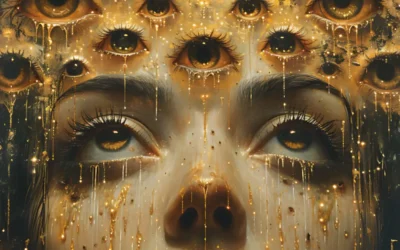

The Full Range of Human Experience
Just as people vary in height, eye color, or personality, they vary in how vividly they imagine.
Some people see nothing at all when they close their eyes and try to picture something — a condition known as aphantasia. Others see images so vivid they are almost indistinguishable from reality — a condition known as hyperphantasia. Most people fall somewhere in between.
This article explores the full spectrum of imagery vividness and helps you understand where you might fall.
What Is the Spectrum of Mental Imagery?
The spectrum of mental imagery runs from no imagery at all to extremely vivid imagery. It is not a binary (you either have imagery or you do not) but a continuum. Most people fall somewhere in the middle — they have imagery, but it is not perfectly vivid.
Understanding where you fall on this spectrum can help you understand how you process experience and how to work with your own mind more effectively.
The Spectrum of Mental Imagery
The spectrum can be understood as five points:
-
Level 1 — No imagery (Aphantasia): “Just black.” No visual images appear when you try to visualize.
-
Level 2 — Very vague imagery: A sense of shape or color, but no clear picture appears.
-
Level 3 — Moderately clear imagery: A recognizable image, but lacking in detail and stability.
-
Level 4 — Vivid imagery: Clear and detailed, but still distinguishable from actual seeing.
-
Level 5 — Extremely vivid imagery (Hyperphantasia): Images that are almost indistinguishable from real perception.
Aphantasia: The Lower End of the Spectrum
Aphantasia is the inability to voluntarily generate visual mental imagery — a “blind mind’s eye” (Zeman et al., 2015). People with aphantasia describe their experience as “just black” — a sense of knowing without seeing.
Prevalence: Approximately 3.9% of the population — about 1 in 25 people (Dance et al., 2022).
What it feels like: When people with aphantasia try to visualize, they experience no visual image — only darkness or blankness. They may know what an object looks like, but they cannot “see” it in their mind’s eye (Zeman et al., 2020).
Important: Aphantasia is not a disorder or a deficit — it is a natural variation in human experience (Zeman et al., 2020).
Typical Imagery: The Middle of the Spectrum
Most people have some level of visual imagery, but it is rarely as vivid as actual perception. Typical imagery is often described as “good enough” — clear enough to be useful but not overwhelmingly vivid.
What it feels like: People with typical imagery can visualize familiar scenes, faces, and objects — but often with limited detail. The image may be somewhat vague, or it may fade quickly. It is not as clear or stable as actually seeing something.
A common experience: Many people with typical imagery are surprised to learn that others have more vivid (or less vivid) imagery than they do. They assumed everyone experienced imagery the way they did.
Hyperphantasia: The Upper End of the Spectrum
Hyperphantasia is the ability to generate unusually vivid and detailed mental images (Zeman et al., 2020). People with hyperphantasia describe images that are almost indistinguishable from real perception — vivid colors, fine detail, and often a sense of presence.
What it feels like: When people with hyperphantasia visualize, they experience images that are extraordinarily vivid and detailed. They can “see” scenes as if they were actually looking at them. The images may be immersive, almost like being in a movie or a dream while awake.
Benefits: Hyperphantasia can enhance creativity, memory, and emotional connection to imagined experiences (Zeman et al., 2020). Many artists, writers, and performers have hyperphantasia and rely on it in their work.
Challenges: Intense imagery can also be overwhelming. Intrusive images can be harder to control, and negative imagined scenarios can feel intensely real (Zeman et al., 2020). People with hyperphantasia may be more affected by worry, rumination, or traumatic imagery.
Variation Across Senses: It Is Not Just Visual
The spectrum of mental imagery applies across all senses — not just vision.
-
Vision — Visual imagery: Seeing images in the mind.
-
Hearing — Auditory imagery: “Hearing” sounds, voices, or music in the mind.
-
Touch — Tactile imagery: Imagining the feel of touch or texture on the skin.
-
Taste — Gustatory imagery: Imagining the experience of taste.
-
Smell — Olfactory imagery: Imagining the experience of smell.
-
Movement — Motor imagery: Imagining movement or action, such as reaching for an object or walking through a room.
-
Space — Spatial imagery: Imagining spatial relationships and layout, such as the arrangement of furniture in a room.
Key insight: Some people have vivid visual imagery but no auditory imagery. Others have strong auditory imagery but no visual imagery. Aphantasia and hyperphantasia can affect all senses, or only some (Dawes et al., 2020). The experience is highly individual — everyone has a unique profile of imagery across different senses.
How Imagery Vividness Affects Daily Life
Where you fall on the spectrum can influence how you experience the world.
Higher Imagery Vividness (Hyperphantasia)
-
Can enhance creative work and artistic expression (Zeman et al., 2020)
-
May make reading more immersive and engaging
-
Can make memories feel more vivid and detailed (Monzel et al., 2024)
-
May make it easier to plan and envision the future
-
Can also make negative imagery (worry, intrusive thoughts) more intense and harder to control
Lower Imagery Vividness (Aphantasia)
-
May make it easier to stay present and grounded in the moment (Dawes et al., 2020)
-
May reduce the emotional impact of negative imagined scenarios
-
Can make creative work more conceptual and less visual
-
May require alternative strategies for planning and memory
-
Does not impair success, creativity, or fulfillment (Zeman et al., 2020)
The Neural Basis of the Spectrum
The variation in imagery vividness is not about whether the brain is “working” but about how well different brain regions communicate.
Key Brain Regions and Their Roles
The Visual Cortex — The Brain’s “Seeing” Center
Location: At the back of the brain, in the occipital lobe.
Role in imagery: The visual cortex processes everything we see. In people with high imagery vividness, the visual cortex activates strongly during visualization. In people with aphantasia, the visual cortex does not activate as strongly — or the activation is disconnected from conscious awareness (Lieto et al., 2025).
Why this matters: The visual cortex is still present and functioning in people with aphantasia. The issue is not the visual cortex itself but the connection between the visual cortex and other brain regions that bring imagery into conscious awareness.
The Fusiform Imagery Node (FIN) — The Image Constructor
Location: In the left fusiform gyrus, on the underside of the brain near the ears.
Role in imagery: This region acts as a “semantic integration hub” essential for constructing mental images (Lieto et al., 2025). It connects meaning, knowledge, and visual processing to create coherent images.
In aphantasia: Research using high-resolution 7 Tesla fMRI has shown that in people with aphantasia, there is a functional disconnection between the FIN and frontoparietal control regions (Lieto et al., 2025). In other words, the brain’s visual processing regions may activate, but the connection to conscious control regions is disrupted — the image is “almost there” but cannot become consciously visible.
Why this matters: The FIN is essential for generating conscious visual imagery. When it is disconnected from other regions, imagery cannot emerge into awareness.
The Prefrontal Cortex — The Brain’s “Executive Center”
Location: At the front of the brain, just behind the forehead.
Role in imagery: The prefrontal cortex is responsible for conscious control, intentional action, and directing attention (Buckner et al., 2008). During visualization, the prefrontal cortex engages the visual system to generate mental images.
In hyperphantasia: The prefrontal cortex may more effectively engage the visual system during imagery, producing vivid and detailed mental images.
In aphantasia: The prefrontal cortex may activate during attempted visualization, but the signal does not effectively reach visual processing regions. The attempt is there — the result is not.
The Hippocampus — The Memory and Imagery Integrator
Location: A seahorse-shaped structure deep within the temporal lobes.
Role in imagery: The hippocampus is essential for memory retrieval and recombination (Schacter et al., 2007). It retrieves stored memories and recombines them to construct new imagined scenes.
In imagery vividness: Differences in connectivity between the hippocampus and visual cortex may explain variation in autobiographical memory vividness (Monzel et al., 2024). People with hyperphantasia often have more vivid and detailed memories because the hippocampus and visual cortex communicate more effectively.
Why this matters: The hippocampus is the bridge between memory and imagination. When it communicates effectively with the visual cortex, both memory and imagery become more vivid.
Key Insight
The variation in imagery vividness reflects differences in functional connectivity — how well different brain regions communicate (Lieto et al., 2025; Monzel et al., 2024). It is not about intelligence, creativity, or capacity for imagination. It is simply about how the brain is wired.
Is There a “Normal” Place on the Spectrum?
No. There is no “normal” place on the spectrum of mental imagery.
Variation is natural and expected. Some people have vivid imagery, some have none, and most fall somewhere in between. These differences are not better or worse — they are simply different.
What matters: Understanding your own experience and finding strategies that work for you. Both aphantasia and hyperphantasia come with their own strengths and challenges. Neither is a disorder or a superpower. They are simply different ways of being human.
The Vividness Spectrum: A Visual Continuum
Here is a simple way to understand where you might fall on the spectrum:
-
Level 1 — Aphantasia: No visual imagery at all. Approximately 3.9% of the population (Dance et al., 2022).
-
Level 2 — Very vague imagery: A sense of shape or color, but no clear picture. Approximately 15–20% of the population.
-
Level 3 — Moderately clear imagery: A recognizable image, but lacking in detail. Approximately 50–60% of the population.
-
Level 4 — Vivid imagery: Clear and detailed, but still distinguishable from actual seeing. Approximately 15–20% of the population.
-
Level 5 — Hyperphantasia: Extremely vivid imagery, almost like actual seeing. Approximately 3–5% of the population (Zeman et al., 2020).
Conclusion: The Spectrum of Human Experience
The spectrum of mental imagery is a continuum — from no imagery to extremely vivid imagery. Where you fall on this spectrum is a natural variation, not a deficiency or a superpower.
Key insights:
-
Variation in imagery vividness is natural and expected
-
There is no “normal” way to imagine
-
Understanding your own place on the spectrum can help you work with your mind more effectively
-
Both aphantasia and hyperphantasia come with their own strengths and challenges
-
The spectrum reflects differences in brain connectivity — not differences in intelligence, creativity, or capacity
Key Takeaways
-
The spectrum — Mental imagery exists on a continuum from no imagery (aphantasia) to extremely vivid imagery (hyperphantasia).
-
Aphantasia — The inability to voluntarily generate visual mental imagery; approximately 3.9% of the population (Zeman et al., 2015; Dance et al., 2022).
-
Hyperphantasia — The ability to generate unusually vivid and detailed mental images (Zeman et al., 2020).
-
Multisensory variation — The spectrum applies across all senses — visual, auditory, tactile, gustatory, olfactory, motor, and spatial (Dawes et al., 2020).
-
Neural basis — Variation reflects differences in functional connectivity between brain regions, not differences in intelligence or capacity (Lieto et al., 2025; Monzel et al., 2024).
-
No “normal” — There is no correct place on the spectrum; variation is natural and expected.
References
-
Dance, C. J., et al. (2022). What is the prevalence of aphantasia? Cortex, 152, 15–25.
-
Dawes, A. J., et al. (2020). A cognitive profile of multi-sensory imagery, memory and dreaming in aphantasia. Scientific Reports, 10(1), 10022.
-
Lieto, F., et al. (2025). Aphantasia as a functional disconnection. Trends in Cognitive Sciences.
-
Monzel, M., et al. (2024). Hippocampal-occipital connectivity reflects autobiographical memory deficits in aphantasia. eLife.
-
Schacter, D. L., Addis, D. R., & Buckner, R. L. (2007). Remembering the past to imagine the future. Nature Reviews Neuroscience, 8(9), 657–661.
-
Zeman, A., et al. (2015). Lives without imagery – Congenital aphantasia. Cortex, 73, 378–380.
-
Zeman, A., et al. (2020). Phantasia – The psychological significance of lifelong visual imagery vividness extremes. Cortex, 130, 426–440.