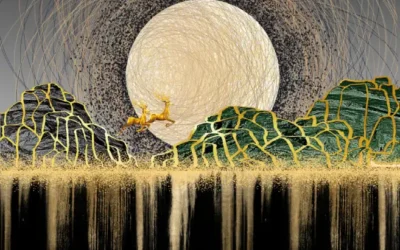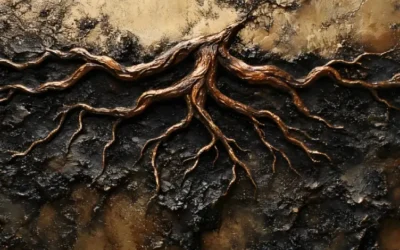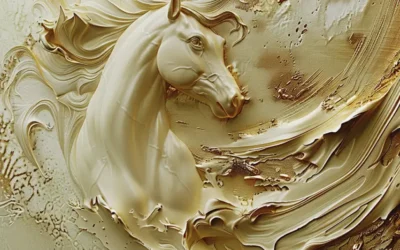

Something arrives in a dream as a dark forest. A feeling that has no name takes the shape of a stone in the chest. A relationship presents itself, in imagination, as a figure standing just out of reach. An emotion that resists all verbal description suddenly crystallizes into an animal — specific, vivid, unmistakable.
The psyche thinks in images before it thinks in words. This is among the oldest observations in the history of psychology, and among the most consistently supported by contemporary neuroscience.
Why Experience Takes Symbolic Form
The brain processes far more than it brings to conscious awareness. Emotional states, relational patterns, somatic signals, implicit memories — all of this is being organized continuously, below the level at which language operates. When this material reaches consciousness, it often arrives in the form most natural to the systems that generated it: sensory, imagistic, symbolic.
Carl Jung observed that the unconscious communicates through symbol because symbol carries what abstract language cannot — the emotional charge, the relational texture, the multiple layers of meaning that a single image can hold simultaneously (Jung, 1964). A symbol, in this sense, condenses. It gathers complexity into a form that can be encountered directly, before it is analyzed or explained.
This is why symbolic imagery in dreams, active imagination, or spontaneous inner experience so often carries a quality of recognition — a sense that what has appeared is precisely right, even when its meaning is unclear. The felt rightness arrives before the understanding. The image is met somatically before it is comprehended cognitively.
The Major Symbolic Registers
Psychological experience organizes itself symbolically across several consistent registers — each with its own quality, its own kind of emotional charge, its own relationship to the layers of experience it tends to carry.
Human figures appear most frequently. They may represent aspects of the self — disowned qualities, idealized possibilities, internalized relational presences — or they may carry more archetypal dimensions, presenting as guides, adversaries, or figures whose authority feels other than personal. The emotional response to a figure in inner imagery often reveals the relational expectation being carried — the posture of the self in relation to it, the quality of contact possible or foreclosed.
Landscapes carry atmosphere and orientation. A vast open plain feels different from a dense forest. A house with many locked rooms carries different information than a house open to the elements. The landscape of an inner scene often reflects the emotional territory being inhabited — its spaciousness or constriction, its safety or exposure, its familiarity or strangeness.
Animals arrive with particular force. They carry instinctual information — energy states, threat responses, drives — in a form that bypasses the verbal mind and speaks directly to older layers of the nervous system. An animal in inner imagery tends to activate somatic responses before conceptual processing begins. Its presence is felt before it is understood.
Objects and elements — water, fire, stone, light — organize experience around their physical qualities. Water carries fluidity, depth, the possibility of submersion or reflection. Fire carries transformation, urgency, illumination or destruction. These associations are not arbitrary. They are grounded in the body’s actual experience of these elements across a lifetime of sensory encounter.
Working With Symbolic Material
The most important principle in working with symbols is one that Jung returned to repeatedly: the symbol is approached, engaged, and allowed to speak — rather than decoded from the outside.
Interpretation that moves too quickly from image to meaning often loses what the image was carrying. The dark forest becomes a symbol of the unconscious. The stone in the chest becomes a metaphor for suppressed grief. The analysis may be accurate, and yet something essential escapes — the specific quality of this forest, this stone, this particular weight in this particular chest.
Symbolic imagery rewards a different quality of attention — one that stays with the image itself, that notices its details, that allows it to develop and change under sustained interest. When a figure in imagination is approached with genuine curiosity — asked what it wants, what it carries, what it needs from the encounter — it often responds in ways that exceed what the analytical mind would have produced alone.
This is the territory where imagination most clearly operates beyond the reach of deliberate construction. The symbol arrives from somewhere that thinking did not send it. And when it is met with the quality of attention it requires, it tends to carry the encounter somewhere that thinking alone could not have reached.
The Image as a Living Thing
Jung described the symbol as a living thing — something that loses its power when it is reduced to a fixed meaning, and retains it when it is allowed to remain alive in its ambiguity (Jung, 1964).
Working symbolically means tolerating that ambiguity — staying with what has appeared long enough for it to reveal what it is carrying, on its own terms, at its own pace.
The psyche offers its material in the form most suited to what it needs to communicate. The symbol is that form. Meeting it as it arrives is the beginning of the work.
Further exploration
How symbolic imagery becomes the internal space where experience reorganizes is explored in: The Inner Arena: How Imagination Shapes Inner Experience and Change